Search This Blog

Wednesday, 26 February 2020

Review: Miss Fisher and the Crypt of Tears

Miss Fisher and the Crypt of Tears is a kind of film Australia doesn't turn out often.  We're big on sombre takes on important issues; the wacky adventures of over-the-top characters occasionally get a look-in. But this is a straight-up romp: flapper-era private investigator Phryne Fisher (Esse Davis) has globe-trotting adventures in which she all but winks at the camera while getting into scrapes and flirting with handsome men. It's kind of cheesy, but that's part of its charm - but is it as charming as it thinks?

The year is 1929, the place is British-ruled Palestine, and Miss Fisher has taken her crime-solving antics global, jumping across rooftops to rescue imprisoned young agitator Shirin Abbas (Izabella Yena), niece of Sheikh Kahlil Abbas (Kal Naga).
 
Exactly how this ties into a series of murders in London, or a lengthy stay at the country home of Lord Lofthouse (Daniel Lapaine), or the mysterious disappearance of an entire village in the deserts of Arabia, or a giant emerald that might possibly be cursed (according to a professor played by John Walters) isn’t exactly a mystery, but there’s little denying this is a movie (directed by Tony Tisle and written by Deb Cox) with a lot of plot.

To be fair, this is a film that needs it: while the costumes are as fantastic as always and various Melbourne locations do a decent job of standing in for various London locations, visually this is nothing to write home about. Possibly any attempt at a more striking style would have been too much of a break from the original television series; it's still surprising that, at a time when even low budget Australian films often feature striking visuals, this is very much a meat and potatoes effort.

This results in the film's strongest stretch being the middle act, which is basically a traditional murder mystery set in an English country manor. Why the whole film wasn't like this is both obvious and annoying; clearly a big screen version of Miss Fisher needed to be bigger than the television version, and yet the closer this gets to the small screen version the stronger it becomes.

Both the scenes in Palestine - which involve a somewhat lacklustre motorcycle chase and a lot of scrabbling around on the roof of a speeding train that is clearly an old "Red Rattler" carriage from the Newport railway museum - and a final act set in the desert feel like the film biting off more than it can comfortably chew, striving for a kind of Indiana Jones energy and ending up closer to Quigley Down Under.

But this is a film where those kind of judgments are largely beside the point. The appeal here is seeing Miss Fisher looking glamourous while sticking it to pompous toffs, throwing quips around, and making the clearly infatuated Detective Inspector Jack Robinson (Nathan Page) squirm. On that level, this gets pretty much everything right.

Davis is clearly the shining star here, giving Miss Fisher charm and charisma to spare. If this film has a serious problem, it's that it thinks, however briefly, that widescreen locations are what people are coming here to see. Every moment that Miss Fisher isn't front and center on screen is a moment wasted; she's not just the best thing in this film, she's the only thing that makes it a film, and her fans will find plenty here to applaud.

- Anthony Morris

Thursday, 20 February 2020

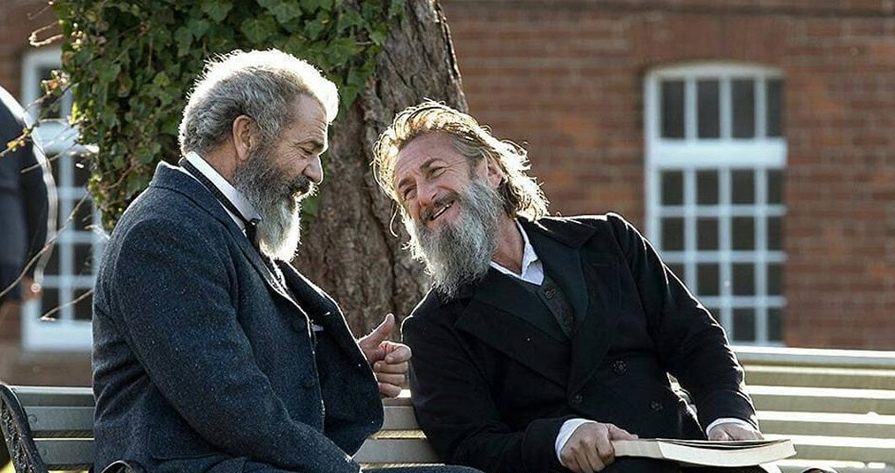
Review: The Professor and the Madman

The Professor and the Madman is not a decent film for a whole range of reasons - which, because they include Sean Penn seemingly cutting off his own dick, I will most definitely be going into later on - but a big part of it is that Mel Gibson is trying to replace how the public sees him with how he sees himself. Last year's Dragged Across Concrete worked in large part because there Gibson was playing an angry racist. Here? He's a living saint.

Based on the true story of how the Oxford English Dictionary came to be, one of the many problems this film has is that while a while lot of things take place, very few of them join up to form a story.  Professor James Murray (Gibson) is a Scottish school teacher who's religious, well-mannered, a loving husband and caring father, and a man passionately devoted to language: who better to take over Oxford university's struggling dictionary project?

Meanwhile, former US Army surgeon turned crazed murderer Dr William Minor (Sean Penn) is acting crazy at Broadmoor Criminal Lunatic Asylum, where he's been sent after murdering the husband of Eliza Merrett (Natalie Dormer). There he saves the life of a guard impaled on a faulty gate, decides he wants his army pension sent to Merrett to make amens for his crime, and then really gets into helping out Murray (whose big idea to get the dictionary done is to ask the public for help).

Conflicts between director Farhad Safinia (who's had his name taken off the film) and the producers meant this has been sitting on a shelf since 2016, and the end result has some definite rough edges in editing (plus a couple of establishing shots seemingly shot on a handicam from 2004).

But not even a skilled editor could make Penn's massively over the top performance belong alongside everyone else, or change the way that Steve Coogan's character (Murray's biggest supporter) literally just shows up at multiple points to say "I have a cunning plan" and then saves the day via some off-camera scheme. Did I mention Minor ends up teaching Merrett how to read?

It'd be tempting to say the film's biggest mistake comes when Minor - suddenly tormented by his budding romance with the wife of the man he killed - rips a metal strip from a chair and uses it to (tastefully) do something that results in him bleeding profusely from the groin. But does he actually cut off his dick? Whatever he does lop off kills the romance stone dead so it seems safe to guess he's now coming up short in the downstairs department. Did this happen in real life? No. Why did anyone think it was a good idea to put it in the movie? Well, it does star Mel Gibson.

Annoyingly, it's hard to deny that Gibson remains a strong and charismatic actor. He's easily the best thing here as the films moral centre, a man who sticks by his principles, stays true to his friends, consults his wife on all major decisions, clearly loves his children, is well read without being arrogant, is a firm but thoughtful leader and so on and so forth.

But in 2020 the fact that Gibson is an angry man with a dark side he can't hide is so firmly ingrained in the public consciousness - when the public bothers to think of him at all; if being an abusive drunk hadn't killed his career a decade ago his star would probably still be on the wane today - that his warm and kindly performance here feels like the set up for a joke that never comes.

- Anthony Morris

Thursday, 13 February 2020

Review: Sonic the Hedgehog


Remember that creepy weird Sonic the Hedgehog design that so freaked out fans this movie was put back three months while the film's effects department went through the entire film and reworked the CGI character to be less... spindly? Out went the smaller eyes and long legs, in came the more compact and cartoony version fans love?

Watching the finished movie, that original design makes sense: this Sonic is, for most of the movie at least, an awkward, hyperactive teen trying to figure out if he has a place in the world. It makes sense that he'd look a bit off; then again, he also looked a bit off, and the new and improved version is a lot closer to the super-fast blue alien hedgehog we all know and possibly have feelings towards.

           (the original model Sonic - note the legs and tiny face)

Opening mid-explosion in the kind of "that's me - Sonic. Bet you're wondering how I got into this predicament" introduction that even the kids this is aimed at have seen too many times, this rushes through Sonic's origin (alien raised by an Owl, has magic teleporting rings, is sent to Earth to hide out, is given the not at all psychological damaging advice of "never stop running") to get to the status quo: he lives in a cave of the outskirts of the small town of Green Hills, where he spies on everyone and talks to himself in an attempt to prevent the isolation from driving him insane. Good luck with that.

James Marsden was having a bit of a career comeback when he signed on for the role of local cop Tom Wachowski, so that's probably over now. But he remains the most likable man in Hollywood and brings a lot of charm to a largely thankless role as firstly a bored cop and then secondly a surrogate parent to Sonic after an emotional outburst from the depressed and frustrated hedgehog results in an energy burst that attracts the attention of the US military's most unhinged drone pilot, Doctor Robotnik (Jim Carrey).

Carrey is doing a greatest hits tour here, dusting off all the old tics and antics that made him a star twenty five years ago. The good news is they still work, putting the film in the awkward position of having its star hedgehog as the weakest performance in the film. But there are a bunch of decent speed-related action sequences, and Sonic's emotional arc - he knows he should flee the planet but his next stop is a lifeless mushroom planet and he can't keep living alone and on the run - is strong enough to hold everything together.

This is much more aimed purely at kids than last year's Detective Pikachu, and it moves fast enough (sorry) to keep them entertained while the grown ups wonder why Marsden doesn't get better roles. The ending leaves the door open for at least one sequel, though there's nothing much here that'll leave you wanting more; guess Sonic'll have to be happy with the games and comics and TV series and collectable figures and hoodies and phone cases and whatever else the Sega official store is selling this week.

- Anthony Morris

Thursday, 6 February 2020

Review: Birds of Prey

It's always a surprise when a superhero movie turns out to be good. That's because most superhero movies are more like Birds of Prey: just erratic and uneven enough to leave you feeling vaguely unsatisfied, even if most of the elements for a decent film are present and accounted for. It's not hard to be better than predecessor Suicide Squad (and this is), but DC haven't cracked the formula for a successful ensemble film just yet.

The hook here is that this is girls versus boys, straight down the line; the days when this kind of film would have a wimpy guy on the good girls team, or the bad guy would have a female assassin so the girls had someone to fight are over. This battle of the sexes works better than something like last year's all-female gangster film The Kitchen did, mostly because the superhero genre is literally about empowerment fantasies - even if Margot Robbie's now-single Harley Quinn is largely a quirky, garish bad guy who snorts cocaine mid-fight to level up.

(she does get something of a redemption arc, but it's slight: you don't make money changing a successful superhero)

Quinn is the lead here, with bad guy Black Mask / Roman Sionis (Ewan McGregor) in second place camping it up entertainingly when he's not having faces removed or ordering a terrified guest in his club to dance on a table while her date is forced to peel her dress off with a knife. The rest of Quinn's girl gang - Diana / Black Canary (Jurnee Smollet-Bell), Detective Renee Montoya (Rosie Perez), Huntress (Mary Elizabeth Winstead) and Cassandra Cain (Ella Jay Basco) - tend to get one character trait each, some of which work better than others. Montoya's 80's cop movie banter falls flat every time, while Huntress' failure to maintain her stern avenger persona is fun.

A movie that contains five - six if you count the main bad guy - origin stories is bound to have a lot going on in the script department. Sensibly, the actual plot is extremely straightforward: everyone wants a diamond that has a bunch of bank account details laser-coded into it, and when a character swallows it then we have a reason for this search across a somewhat gritty Gotham (it's like a sunnier version of the city seen in Joker) to run movie length as the good guys wait for it to be pooped out while keeping the swallower away from the bad guys willing to just cut it out.

(is there an article to be written about movies that use someone swallowing the mcguffin as an excuse to drag things out? It feels like there is)

What is a surprise is that so much of the story is a mess. Initially Quinn is telling it and her unbalanced state of mind after being dumped by the (unseen) Joker kind of justifies the going back and forth, but there's a reason why opening a movie mid-action then freeze-framing while a narrator says "let me explain how I got here" is a comedy cliche, and this does that more than once.

All this ducking and weaving eventually settles down, but this definitely feels like a film that's had a going-over in the edit. The multiple origin stories are either told piecemeal or repeatedly, characters are introduced more than once, other characters are built up then vanish (what happened to the DA?), and the "birds of prey" don't even get together until the final act. While none of this is exactly fatal, if this is trying to sweep an audience along on sheer energy alone then it's not exactly Goodfellas.

The good news is that this does get right the only things we really care about in superhero movies: the characters are mostly memorable and the fights are largely entertaining. Not all the cast get a real chance to shine - this probably could have lost at least one Birds of Prey team member, especially as their girl gang chemistry isn't great - and the fights occasionally feel a little samey, but by the final act it's all settled into a groove that's solidly, if not all that spectacularly, entertaining.

- Anthony Morris


Thursday, 26 December 2019

Best and worst films of 2019


The good news is that there were a lot of good films out in 2019. The bad news is that seeing those films in a cinema just keeps on getting harder. It’s not even a secret that Disney would really prefer it if cinemas just showed Disney movies, which would seem hilarious except that they had a bunch of the biggest movies of the year and bought Fox studios; when Joker making a billion dollars is a sign of hope, you know we’re in a dark place.

As is usually the way these days, the superhero movies grabbed all the attention despite rarely deserving it (Shazam! was probably the best of the bunch; Avengers: Endgame mostly just felt like an end), while the other big money makers were often films that just kept on quietly raking in the cash like Aladdin or Rocketman. At least the idea of coming back after years with “all new” sequels in an attempt to revive long dead franchises seems to have died yet again, even if Terminator: Dark Fate was nowhere near the worst Terminator movie this century.


Worst films of 2019 (in no particular order)

There’s always more bad films than good in a year, but usually they’re just bad in a way that’s sad rather than rage-inducing. What was notable this year was the sheer number of bad films that didn’t even care about being good; while a couple of these films stunk because of obvious mistakes they really shouldn’t have made, or were just the last gasp of a series that had run out of steam a movie or two earlier, some just set out to be as firmly average and bland as they could be whatever the subject matter or possible potential.

(there’s four horror movies on this list because a horror movie only has one job: be scary. If you don’t want to do that, make something else)


*Doctor Sleep
*MiB: International
*Black Christmas
*The Lion King
*Pet Sematary
*It Chapter 2
*King of Thieves
*Ride Like a Girl
*Poms
*Judy & Punch


Best films of 2019 (in no particular order)

This really was a good year for film; I’d take pretty much any one of these films over anything in my top ten list for last year. And Rambo: Last Blood didn’t even make the top ten! It was a pretty good year for films I didn’t see in cinemas too: Netflix’s Marriage Story is great, and if Scott Adkins’ movie Avengement had made it to cinemas here it definitely would have been on this list.

Also I should stress I haven’t yet seen Cats, so obviously this top ten list is provisional at best.

*Toy Story 4
*Parasite
*Once Upon a Time in Hollywood
*John Wick 3
*Ready or Not
*The Irishman
*Pain and Glory
*The Report
*Portrait of a Lady on Fire
*Little Women

Saturday, 21 December 2019

The Edge of Criticism: Cats and Star Wars: The Rise of Skywalker

Most of us have some idea of what to expect when we go to see a movie. Sometimes this works against us; expect too much and you're set up for disappointment. But what if we want a movie to fail? What if the whole point is to laugh at something that's shit, or to feel smug that we never fell for the suckers game of liking something that was bound to let you down?

Much as film critics - critics of any kind, really - like to think the best of their profession, their profession is like any other in the 21st century: if you don't give the people what they want, they'll go elsewhere. It's perfectly possible to have a career (or what currently passes for a career in film criticism, which largely involves having a moderately high twitter follower count) based entirely on being contrary, but being "the reviewer you love to hate" has its risks at a time when fans aren't particularly inclined to embrace contrary views. Swim against the tide and the sharks will come for you.

For critics who rely on being in tune with what the public wants to hear to keep their job (or their social media profiles), reviewing is largely a case of getting in first and being just vaguely positive or negative enough that if the consensus changes dramatically they can shift with it to remain "part of the conversation".

Count up all the online reviews (tweets) that talk about how they felt one way towards a film at first but the more they think about it, the more they feel a different way; there's nothing wrong with changing your mind, but you have to have made it up in the first place.

So a film like Cats is sweet, blessed relief, because everyone knew (based on a trailer and some costume shots) that it was going to be bad. The only question was, how bad was it going to be? Which means the real question was "how attention-grabbingly over-the-top can my review be?"

This type of already decided train-wreck is a rare opportunity for a reviewer to break out from the pack and make a name for themselves if their ghastly hate-take is savage or vicious enough to go viral when "just how bad is Cats?" becomes a mainstream news story. Loads of people you've never heard of weren't going to let this chance go to waste.

That's not to say Cats is a good film. There are plenty of completely reasonable attempts by critics and reviewers to come to grips with its weird sexual energy, bizarre non-story and wacky hambone performances. But because of the way criticism "works" in the 21st century, having a high profile film that's safe to slag off means a lot of people left the reality of the film far, far behind in an attempt to keep the focus firmly on themselves. Maybe stick to critics you trust for this one.

Star Wars: The Rise of Skywalker is the flip side of this dynamic. Whereas the Cats reviews are often openly mocking or incredulous - as if an adaptation of a massively successful stage show suddenly appeared out of nowhere with no warning - Skywalker has largely received careful, nuanced reviews, liberally scattered with spoiler warnings to reassure fans they're not finding out anything they may not want to know.

(this is especially hilarious as the film repeatedly delivers what is supposed to be massive plot points - and by plot points I mean the literal deaths of main characters - only to walk them back, at times within the same scene. How do you spoiler a warning a film where nothing means anything and everything is an increasingly desperate attempt to shock a reaction out of a jaded audience?)

Star Wars, of course, has a large and active fanbase who are increasingly committed to complaining about anything that doesn't meet their standards of what a kids raygun adventure serial should deliver. And with that power comes, well, power; while the opportunities to be openly mocking or incredulous of Skywalker aren't exactly short on the ground - even for a Star Wars movie it's not particularly coherent - for the most part in reviews its flaws are glossed over or concealed as a spoiler even as a vague sense of disappointment comes through.

In the world of film culture where critics reside, Cats is friendless and an easy target; Star Wars is a heavy hitter nobody wants to cross. So Cats is criticised for silly costumes and bizarre sets; have you seen the outfits in the Star Wars movies? Cats is fair game because it barely has a story; people wonder aloud whether it's a spoiler to reveal that Skywalker starts off with the announcement out of nowhere that a character who died in a movie 35 years ago and has never been mentioned in this series is suddenly back and will take over the galaxy within days.

The thing is, neither of these films are unwatchable, and judged by their own standards they're far from disasters. But nobody wants to hear that Cats is just weird and strange (like the stage show) when the greenlight to beat it up is shining strong; Skywalker has to be taken seriously and treated with respect, even though the best way to enjoy it is as utterly disposable pap where nothing means anything.

Once the initial rush of publicity passes and being "part of the conversation" is no longer a chance to get noticed, maybe reviewers and critics will talk about these films free of the hype. More likely they'll move onto the next high profile film and try the same thing all over again. Is Clint Eastwood #cancelled yet?

- Anthony Morris


Friday, 13 December 2019

Review: Black Christmas


It’s the holiday season, and most of the students are heading home from Hawthorne College. Unfortunately, some of them will be heading home in a body bag thanks to a mysterious cloaked maniac. Sounds like a generic slasher story? Maybe because the original Black Christmas pretty much invented the slash genre? 

You wish; this (third) remake of the classic horror film has found the one ingredient guaranteed to turn a mildly creepy film into sure-fire nightmare fodder: loads and loads of one-sided and sophomoric discussions about sexism and the patriarchy.

Okay, there is a small amount of showing mixed in with all the telling, as Riley Stone (Imogen Poots) and her friends plan to get payback on a creepy frat (one member sexually attacked Riley a few years ago and got away with it)  just as the aforementioned masked slasher is murdering women one by one.

Come to think of it, it's hard to be sure at times that these women are actually being murdered, as the film constantly cuts away from their possibly brutal deaths before even the slightest amount of gore can been seen. In fact, there's a weird post-murder scene at one point where we're shown a corpse just dumped on a balcony in broad daylight, presumably to confirm that the woman actually was killed, which we need to know because of Plot Reasons.

Anyway, the suspect list is fairly lengthy, and yes I'm joking because this is a movie that features multiple scenes discussing how all frat boys are rapists so obviously the frat is involved. What about a misogynistic professor (Cary Elwes)? Sure, why not. And the sinister bust of the College's founder? Yeah, go nuts. Especially as none of this makes any sense whatsoever.

Which is not usually a problem in horror movies, but the slasher side of things here is straightforward and uninspired, especially as the (clearly edited) kills themselves are largely bloodless. Exactly why this story had to be told as a slasher film is up for debate - and these characters love a good debate - as the generic stalk and slash scenes and muddled supernatural element make it clear that the film-maker's passion lies elsewhere.

That's frustrating, because when the film-makers are engaged this actually does have a fair bit to offer. Riley's trauma is well handled, the blunt way this confronts campus rape culture has real force, and the women's (initial, comedic) revenge on the frat hits home surprisingly hard. What this feels like is a decent short film about a group of young women taking back their power after one of them was abused and the school did nothing, only with a whole lot of half-hearted slasher stuff wrapped around it.

Men don't come out of this well, but it's hardly man-hating; all the female characters (outside of Riley) are just as preachy and one dimensional. One of the women spends the entire movie lecturing everyone around her, (she even gets to say "did you just 'not all men' me?" to one of her friend's boyfriends; the slasher then kills him) - including telling Riley she's not dealing with her trauma the right way (by fighting back). 

Instead of getting it in the neck, she turns out to be so right about everything even Riley tells her "you were right to constantly nag and lecture me, an abuse survivor, for not doing things the right way which is obviously your way". Only with slightly less words.

A horror movie where you want everyone to die isn't really doing its job; a horror movie where you can't even tell who's actually died is somehow even worse. There's a thousand horrific stories to be told about the patriarchy, but this isn't any of them. It's not even a decent Christmas movie! Go watch Silent Night, Deadly Night instead.

- Anthony Morris


-->