Search This Blog

Thursday, 25 January 2018

Review: Sweet Country


Few Australian films these days feel relevant let alone essential, but Sweet Country, an outback Western set in 1929, is one of those films. The second narrative feature from Indigenous director Warwick Thornton (Samson & Delilah, 2009), Sweet Country is beautiful, important and utterly gripping, from its first close-up of black tea and white sugar boiling in a billy as racist violence occurs off screen, heard but not seen. The mystery of this conflict, and its eventual consequences, are unspooled in a confident and original narrative that's exciting despite its unhurried bleakness and the intimations of inevitable tragedy.

Inspired by real events, with a screenplay by sound recordist David Tranter and writer Steven McGregor (Redfern Now, The Mystery Road series), the story concerns an Aboriginal stock-hand (Hamilton Morris) on trial for the murder of a white man. Flashing forwards and backwards in time, (sometimes for the briefest of moments, like a flicker of memory or prescience) the film traces the events leading up to the murder, involving the stockman's wife (Natassia Gorey-Furber), a shell-shocked war veteran farmer (Ewen Leslie) and a mischievous mixed-race boy (played by twins Tremayne and Trevon Doolan). We follow the pursuit of the accused man and his wife across vast and stunning landscapes by a bloody-minded police officer (Bryan Brown in fine and familiar form), with a gentle Sam Neill in the role of the kind Christian farmer who employs the accused and tries to be the voice of reason. Matt Day plays the judge sent from the city to preside over the dusty outdoor courtroom. These scenes are stunning in the economy and eloquence with which they depict the absurdities and cruelties of dealing with Indigenous experience within the white legal system.

Thornton is an accomplished DOP as well as director. (His cinematography credits include Radiance and The Sapphires as well as his own shorts, documentaries and features.) Here he gives the impression of simplicity, but using images captured with double-mounted cameras and post-production processing, the grain of natural elements is presented in contrast to the lack of grain in human structures and skin. It's a subtle effect, felt rather than seen, but giving fresh spirit to the much-photographed Northern Territory landscape. Simplicity is evident too in the complete lack of a musical score, and yet this adds rather than detracts from the film's emotional impact.

Sweet Country premiered in September 2017 at the Venice Film Festival, where it won the Special Jury Prize, and went on to win the Platform Prize at the Toronto International Film Festival. Frequently likened to two other excellent Australian films, The Proposition (John Hillcoat, 2005) and The Tracker (Rolf de Heer, 2002 ), Sweet Country is, in its own way, more sophisticated and nuanced than those films, with light and shade in characters on both sides of the racial divide. And while Sweet Country is an angry film, likely to inspire rage and shame in the white viewer, there's something hopeful about seeing a story so well told, and in looking Australian history full in the face.

Sweet Country is in Australian release from 25 January 2018.

Four Stars
Rochelle Siemienowicz

Thursday, 18 January 2018

Review: The Maze Runner: The Death Cure

 
One of the more surprising things about the surprisingly entertaining third and final installment in the Maze Runner series is that it’s an action movie that uses its action to explore character. Or even just that it’s an action movie full stop: most YA franchises have focused on world-building and character-based drama, two things this film is barely interested in. It’s a generic post-apocalyptic world with only one modern city left and the story is barely more than a series of escalating rescue attempts. This breakneck pace occasionally leads to some head-scratching moments – one previously dead character returns with the explanation “I wasn’t dead – you just left me for dead”, while another important character introduces himself as “a businessman” and then in his next (and final) scene blows himself up for reasons that make no business sense whatsoever – but these are good plot problems to have, because they mean this is a movie that isn't interested in slowing down.

All you really need to know here is that on one side are Thomas (Dylan O’Brien), sidekicks Newt (Thomas Brodie-Sangster) and Frypan (Dexter Darden), and hard driving love interest Brenda (Rosa Salazar) trying to rescue bestie Minho (Ki Hong Lee) from the baddies, who include evil scientist Ava (Patricia Clarkson), evil thug Janson (Aiden Gillen) and possibly evil former gal pal Teresa (Kaya Scodelario). The bad guys are pretty bad, and not just because their corporation is called WCKD: they’re torturing kids who are immune to the mutant-zombie creating Flare Virus because tortured teens give off brain chemicals that could maybe be used to make a cure. 

(there’s an interesting question there about the ends justifying the means and so on, but this is too busy blowing things up to do more than occasionally wave in that general direction)

Usually a film like this would get less interesting the further away it moved from the central events of the story (to be fair, this film's minimalist approach to its characters does mean that the rare moments of drama between them carries real weight). “Action” in the old Hollywood sense of actions carried out by the lead characters (shoot-outs, blowing up bridges and so on) has largely been replaced by increasingly generic and special effects-heavy “spectacle” designed to look impressive but tell us almost nothing about the characters taking part, as seen in pretty much every superhero movie this decade. 

It’s only recently (and largely confined to the John Wick films in cinemas) that we’ve seen even a slight return to the idea that how a character operates in an action sequence might actually tell us something about them as a human being. Ideally action sequences in blockbusters should function the same way as musical numbers in musicals – the story is suspended to move into an area of pure cinema that gives us an insight into the character’s inner life – but in practice stunts and CGI take precedent almost every time.

Here though, the constant action (generally well handled by director Wes Ball, even if the bad guys can't shoot straight) actually does illuminate the differences between characters. WCKD city is repeatedly presented to us as a maze-like collection of streets and corridors, which makes sense considering trapping teens in a maze was the whole point of their evil scheme in the first film. But time and time again while the bad guys operate in two dimensions our heroes work in three: on at least three occasions where it looks like the bad guys have trapped Thomas and company they escape by moving vertically out of a previously horizontal situation. 

Partly that's simply because moving up or dropping down makes for a cool visual. But it also makes sense for who the heroes are and the world they want to create: if you’ve been trained to fight by being trapped in a maze, your idea of escape isn’t going to be running down more corridors or roads, but soaring over them. It’s no surprise then that the one character here who straddles both worlds is eventually presented with an escape that requires them to move from the horizontal to the vertical, the whole film building to a moment where survival literally requires them to embrace a new way of moving through the world. 

Which is pretty impressive considering it's also the same "you gotta jump now!" action movie climax we've seen a thousand times before.


Anthony Morris


Thursday, 11 January 2018

Review: All the Money in the World


Inspired by real events around the kidnapping of 16-year-old John Paul Getty III in Rome in 1973, and based on John Pearson’s book Painfully Rich: the Outrageous Fortunes and Misfortunes of the Heirs of J. Paul Getty, Ridley Scott’s latest film is a tense crime thriller with an unforgettable monster at its heart. Like the heated media scrum around the real kidnapping, the film itself has attracted media furore because of the last-minute re-shooting and re-editing to replace disgraced actor Kevin Spacey with Christopher Plummer in the role of the hard-hearted tycoon. The good news is that Plummer is perfect as the calcified miser who must win at all costs. Spacey would no doubt have created his own brilliant villain (perhaps one day we’ll see that version on a DVD extra), but now it’s hard to imagine anyone bettering Plummer’s Getty. Read the full review at SBS Movies.

Sunday, 31 December 2017

The Year in Movies


The film business is built around giving consumers what they want. But even today, with the internet tracking our every choice and using the profile created to generate content ever-more targeted to our deepest wants and needs – and yet, still no Married… with Children reunion  – “giving consumers what they want” largely boils down to making films in various well-defined commercial genres. And in 2017, a lot of those genres didn’t pay off.

As the year comes to a close there’s been plenty of must-read “years best” movie lists online – see my co-blogger Rochelle’s list here, my co-author Mel Campbell’s list here, Rochelle’s co-podcaster Lee Zachariah’s list here for starters – and while it’s no real surprise to see many of the same films turning up on many of the many many lists internet-wide, what has been noticeable is that many of the films have been roughly the same kind of film.

Usually this would inspire a range of hot takes along the lines of “2017 was the year of the [insert genre here]”.  But while it’s possible to make the case for plenty of genres, be it smart social horror (Raw, Get Out) or old dudes part their prime (Logan, T2 Trainspotting) or space opera (Valerian, Star Wars: The Last Jedi), or pretty much any two or more mildly similar films – hey, Manchester by the Sea and Call Me By Your Name both came out in Australia in 2017, it must have been the year of Male Weepies With Long Titles – in 2017 so many of the good films felt like variations on the same “quality” film.

Part of the reason why Get Out seemed like such a big deal – and, I suspect, is why it's at or near the top of many lists – is because it wasn’t a polished slice of self-consciously quality film-making like so many other “good” films in 2017.  Get Out was a genre film that had something to say and wanted to say it in a way that went beyond congratulating the audience on their good taste for choosing to watch a quality feature film: [SPOILER ALERT] it was a film about racism that was also about mad scientists doing partial brain transplants - that’s the kind of craziness we needed more of in 2017.

(you could argue we got that with Mother!, except that Mother! was a film way more interested in looking deep than actually having anything deep to say - it wasn’t even as good as Geostorm, a film whose only virtue lies in the fact that “Geostorm” is fun to say.)

Instead what we ended up with in 2017 was plenty of perfectly well-made “quality” films. Obviously that wasn’t the only kind of film being made in 2017 – though I didn’t see any of you at The House – but with most of Hollywood’s blockbusters failing to kindle any serious excitement (remember when Kingsman: The Golden Circle seemed promising? Even Transformers: The Last Knight was only insane in a half-hearted way) the spotlight fell on quality films (and when they weren't around, evil clowns) to lure people into cinemas. 

And that’s fine! I like a good quality film as much as the next person - who at the movies I go to is usually some pension-age media hack who thinks it's hilarious to loudly point out how many production company logos there are at the start of a film - and my top ten-ish of 2017 (sorry, that’s what all this is leading up to) has plenty of them on board. But “quality” is as much a genre as any other - we can use the term “Oscar-worthy” if you’d prefer - and it's simply not a great year in movies when one genre dominates over all others.

In 2017 I would have preferred a few more great films that weren’t self-consciously quality films - more films like Girls Trip and Colossal and John Wick 2 and Happy Death Day and War For the Planet of the Apes and Split and even Valerian, which was kind of a mess in a lot of ways – simply because I go to the cinema to feel things (as I am dead inside) and shock and amazement and excitement are as much fun to feel as muted single-tear sadness at the ineffable beauty of life.
  
But what do I know? I’ve already locked in Brawl in Cell Block 99 as my best film of 2018. Direct-to-DVD in Australia January 31st, everybody! Vince Vaughn beats up a car!


My best of 2017:

*Manchester by the Sea
*Moonlight
*Happy Death Day
*Logan
*Colossal
*Ingrid Goes West
*Split
*Thor Ragnarok
*War for the Planet of the Apes
*Girls Trip
*Jackie
*Valerian
*The Eagle Huntress
*Power Rangers
*20th Century Women
*The Edge of Seventeen
*Dunkirk
*I Am Not Your Negro
*John Wick Chapter 2


My worst of 2017:

*Live by Night
*XXX: Return of Xander Cage
*A Cure For Wellness
*Chips
*Passengers
*Guardians of the Galaxy Vol.2
*Baywatch
*The House
*Churchill
*Snatched
*The Mummy
*The Hitman’s Bodyguard
*American Assassin
*Justice League
*A Few Less Men
*The Snowman

Anthony Morris

Thursday, 28 December 2017

The Year in Reviewing


If this article painted a grim picture of the state of Australian film criticism at the start of the year, things have only gotten worse: everywhere you turn reviewers have been fired, others have been replaced by critics already working elsewhere, and the “new screen focused review show” the ABC promised turned out to be Screen Time, a chatty panel show that featured a grand total of zero full time film critics.

It’s been clear for a while now that the future of film reviewing – and much of the media in general - is global. A handful of big name players will dominate the global market, small-time local outlets will pick up the crumbs left over, and those in between will increasingly find themselves squeezed out. That’s already the case with film reviewing. The USA and UK have a handful of big name critics whose opinions are sought out world-wide; it’s a very long drop to the local level, where “influencers” are wined and dined (well, free popcorn’d and coke’d) at a screening so they can talk about the good time they had at the movies on breakfast radio.

Australia is an English-speaking nation with (generally) timely access to the Hollywood blockbusters readers are interested in world-wide; why don’t we have any world-level critics working in our media? Partly it’s due to our media having no global reach: News Corp’s Leigh Paatsch is Australia’s mostly widely read reviewer, but thanks to News Corp's paywalls their arts coverage doesn't attract online interest (which may be why Paatsch seems to have shuttered his reviewing twitter account: https://twitter.com/leighpaatsch).

Partly it’s due to local media organisations having zero interest in competent film coverage: both the ABC and Fairfax have shed numerous critics in recent years, while Fairfax’s current approach – spreading new releases across three reviewers – means that the film and not the reviewer is the focus for promotion; if you’re interested in Jake Wilson’s take and he’s not the one reviewing a particular film, you’re out of luck. Having a single reviewer is clearly a much stronger marketing angle, but this team approach is consistent with Fairfax's long running opposition to making decisions that might conceivably attract or retain readers.

And partly it’s… a whole range of factors, from Jason di Rosso, the ABC’s only remaining full-time critic, working on radio (where reviews, even in podcast form, are less likely to travel internationally), to international players bringing their own critics to Australia, to a general shift away from traditional reviews towards hot takes as websites realise that film articles on race and gender are much more likely to get hits than film reviews focusing on storytelling and performances.

Film criticism has never been a job with a high turnover. People who score a position being paid to watch movies rarely move on of their own free will. But with the local market shrinking – it’s increasingly likely that when the (two?) remaining full-time critics in the Australian media finish up they won’t be replaced - and no scope to expand overseas, new voices are being squeezed out. The handful of Australian critics who have made a name for themselves locally are constantly forced to take jobs that once would have gone to up-and-comers as opportunities shrink across the board. Unpaid blogs and podcasts remain an option for those able to make a living elsewhere, but without the reach of established media players it's difficult to be heard.

And so we return to the same situation we had thirty years ago: paid film criticism is basically a closed shop, only now it’s name recognition rather than being attached to a big publication that keeps a reviewer in work. But as the direction of local media increasingly turns towards focusing on the handful of things that aren’t being done better overseas, the result – as we’re already seeing with The Guardian, where the only films reviewed by Australians are Australian films – will be that the international blockbusters that dominate Australian cinemas will be reviewed by international critics, with local critics left to write professionally on a handful of Australian films a year.

Of course, this is only bad news if you think international films deserve a local take – if you think Australian culture in some way differs from the United States and so films addressing issues specific to one culture could be viewed in a different way by another. But if you thought like that then you’d never get a toe-hold in the international market – and as we’ve established already, that’s really the only option left if you want to make reviewing your career. Still, it could always be worse: if you really want to have a long-term future in reviewing film, it’s probably a good time to start learning Chinese.

Anthony Morris

Thursday, 21 December 2017

Eleven Films I Loved in 2017

by Rochelle Siemienowicz

I detest making Best-and-Worst lists. It seems like such a crude schoolboy's approach to films; like collecting and pinning beetles to a board and killing them in the process.

So let's call this a loose list of eleven films (not five, not ten, but eleven, just to be contrary) that I loved in 2017. These films delighted, surprised or impressed me in some way. They leave a trace or linger in my memory long after I saw them. 

Here they are, in no particular order.

1. Faces, Places (Agnes Varda & JR)
I raved about this playful, wise and life-affirming documentary on the August episode of Hell is for Hyphenates. It's a deeply egalitarian celebration of the value of ordinary people in unfashionable places. I can't get enough of Agnes Varda.

2. Raw (Julia Ducournau)
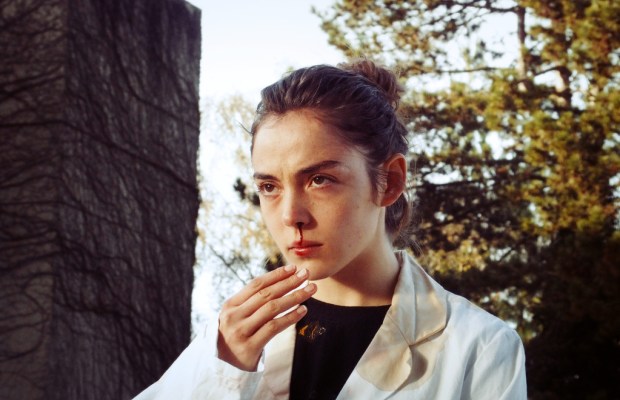
A sensitive and sophisticated cannibal coming-of-age tale, my review of this fresh, French, female horror is here on SBS Movies.


3. Get Out (Jordan Peele)
Combining horror, comedy and social commentary about America's race relations, this smart film worked on so many levels. It was genuinely scary, genuinely funny and I still think about it every time my teaspoon clinks against a cup.

4. The Party (Sally Potter)
I saw this hilarious metronome-timed black-and-white chamber comedy at the Melbourne International Film Festival and laughed so loud. The performances were universally delicious, but special mentions to Patricia Clarkson, Bruno Ganz and Kristin Scott Thomas.


5. The Disaster Artist (James Franco)
Funny, astute and surprisingly warm, this portrait of a terrible artist, and the making of his terrible film, succeeds as a brilliant odd-couple buddy film. 

6. Blade Runner 2049 (Denis Villeneuve)
Sublimely beautiful, there were scenes in this flawed masterpiece that transported and inspired me. I wrote a piece of memoir-infused film criticism about the film here at the Neighbourhood Paper.

7. A Quiet Passion (Terence Davies)
A strange and unsettling portrait of poet Emily Dickinson (whose poetry actually leaves me cold). This was one of those films that was sometimes difficult to sit through, and yet I'm glad I did because the experience of enduring it gave a sense of the life it depicted. Cynthia Nixon gives a singular performance as the eccentric, frustrating and tortured writer. Not a film for everyone.


8. Phantom Thread (Paul Thomas Anderson)
Daniel Day-Lewis and Vicky Krieps give stunning and subtle performances as an obsessive couturier and his latest muse. A sophisticated and very beautiful film about love, power and the games people play. This story went to unexpected places in a most enjoyable way.

9. The Shape of Water (Guillermo del Toro)
Del Toro brings his fairytale sensibility to 1960s Cold War-era Baltimore. There's a strangely sexy fish-man, some Russian spies and frequent detours into song and dance. And yet it works, in no small part due to Sally Hawkins delicate portrayal of a determined mute woman who feels kinship with the beast and embarks on a mission to save him. 

10. Lady Bird (Greta Gerwig)
This often hilarious depiction of the intense and difficult relationship between a commonsense mother (Laurie Metcalfe) and her whimsical daughter (Saoirse Ronan) is pitch perfect in its mix of love, disappointment and resentment. It made me think a lot about my mother, and made me grateful not to have a daughter, and made me eager to see what Greta Gerwig does next.  


11. Call Me By Your Name (Luca Guadagnino)
A languid film full of quiet moments and subtle gestures, this tale of first love and first loss is tangy and sweet. To be honest, much of the pleasure I had was in spending a summer hanging out under fruit trees with beautiful people who compose music, speak multiple languages and wander around without their shirts on. No money problems, no wars, no battles to save the universe, just the pulse of life and sex, and the time to explore exquisite emotions.

Thursday, 14 December 2017

Review: Star Wars: The Last Jedi


As titles go, The Last Jedi suggests a finality rare in modern franchise film-making. The Last Jedi: so we're only a few movies into their takeover of Lucasfilm’s Star Wars franchise and Disney are axing one of the series’ core concepts? That’s gutsy story-telling. And then the film ends on the opposite note, with a major character literally saying out loud that anyone who expected this story to be about “the last Jedi” is wrong. Guess misleading titles are part of the Star Wars tradition too.

This misdirection sums up the entire film: claim big narrative-shattering developments, deliver as little real change as possible. It's hard not to see The Last Jedi as the first Star Wars movie to fully embrace the idea that these movies don’t need to have a traditional story. The original series was about a struggle for the Galaxy that was also a family drama; the prequels explained how evil rose to power in the first place. Even The Force Awakens was about a variety of biggish things; characters leaving their pasts behind for a new life, the Rebellion trying to find Luke Skywalker while the sinister First Order overthrew the Republic and so on. But this film’s story is as follows: the First order have found the Resistance, the Resistance flees, there’s a battle, the First Order follows, there’s another battle, some side characters who did almost nothing meet their fate, the end. It’s the story of a minor skirmish where most people run in circles.

Still, there are plenty of subplots and side adventures that flesh out what is one of the more enjoyable Star Wars films to date. But previous films have been built around the idea that these “star wars” are winnable, that what our heroes are doing will lead towards a definite conclusion. This one repeatedly says that there will be no conclusion, that this battle will never end, and it's only the bad guys who want to discard the past to create a new future. “They blow you up today, you blow them up tomorrow,” as Benicio Del Toro’s morally ambiguous hacker says helpfully. Ending the story on a moment where a lovable space urchin pledges to carry on a fight that never ends feels more like Starship Troopers than Star Wars.


Meanwhile, the now-traditional recycling of scenes, plot points and lines from previous films continues. An isolated training camp with an elderly mentor? One-man fighters taking on massive space juggernauts? Giant walking robots stomping towards enemy trenches on a chilly planet while tiny fighter craft try to hold them off long enough for the main force to escape? The Millennium Falcon swooping in when all seems lost to turn the tide of battle? Well met, old friend.

This running in place extends to the previously introduced characters, who in this installment either find their emotional arcs coming to a resolute end – at least one character will no doubt continue to appear, but their story wraps up in this film – or are kept in stasis, perhaps forever. It feels like Disney, worried about their new investment, seeded their first Star Wars film The Force Awakens with potential mysteries and developments then, when it all worked out just fine, made sure to kill off as many of those plot points as possible here.

To be fair though, part of that feeling is a function of a story which separates the three main newcomers on the Resistance side for almost the entire film: hothead pilot Poe Dameron (Oscar Isaac) mostly spars with General / Princess Leia (Carrie Fisher) and Laura Dern’s buzzkill Vice Admiral as they flee the First Order, Finn (John Boyega) has a mission that keeps him occupied alongside techy newcomer Rose (Kelly Marie Tran) and Rey (Daisy Ridley) is trying to browbeat Luke (Mark Hamill) into handing over his closely guarded yet useless Jedi knowledge.

(seriously, why did old-style Jedis need a decade or more of training when both Luke and Rey seem to have picked up the gist in a week or so?)

Still, if this was a franchise interested in character development they would have chosen a different story to tell. Which is another break from the past; the previous two trilogies were, at their heart, about the idea that people change and grow (in good ways and bad). Even the best parts of The Last Jedi – which would be the way that Rey and Vader wannabe Kylo Ren (Adam Driver) are somehow telepathically linked via the Force and basically have secret skype sessions where they hate-flirt all through the night – are heavy with the suggestion that either character could possibly grow to agree with the other and change their path in life.

Almost from the very beginning Star Wars has been about selling merchandise, and action figures need a consistent, unchanging backstory for “goodies versus baddies” play; what development action figures do have is more about changing costumes and getting cool new toys to drive around in. And for fans who do want character development, there’s all the ancillary media – tie-in novels, games, comics, possibly even spin-off movies – to keep them happy. The movies are the big spectacle that lures people into the franchise, where they discover it contains everything they could want from a story… just so long as they’re willing to purchase the expansion packs.

So while this is full of striking images, effective fight scenes (one lightsabre battle is up there with the series’ best), and even a few honestly emotional moments (mostly based around nostalgia for characters from the earlier, more character-based films), this also feels – even more than the blatant retread that was The Force Awakens – like the point where the rot sets in. Not because of any failure in the film-making; on top of the previously mentioned virtues this is also probably the funniest Star Wars film to date, with a firm sense of the characters as people with shifting moods and senses of humour. But while all previous Star Wars films presented audiences with a galaxy where all the characters’ struggles meant something, this presents us with a war that never ends.

There are plenty of decent stories that can be told against that backdrop: the USA has been fighting the Forever War since 2001 so there’s examples everywhere you look. But Star Wars has always been about brave heroes and evil villains battling it out against a high stakes cosmic backdrop: to have the end result always be a violent stalemate will eventually become depressing no matter how many cute aliens and wacky robots turn up. Presumably that's why future films are focusing on side characters (a Han Solo prequel, a non-Skywalker trilogy) who can have adventures with meaning without being involved in the wider struggle. It might have started a long time ago in a galaxy far far away, but the war they’re fighting rages to this day.

Anthony Morris