Search This Blog

Monday, 20 December 2010

So much for the afterglow: Love and Other Drugs


There is one scene in Love and Other Drugs that sets up why this film looked so promising. Unfortunately, this scene isn’t currently commercially available as a stand-alone segment, which is a shame as every other moment in this film is good for little more than encouraging you to drive a railway spike through your forehead. But for one moment in one scene, you can almost maybe just see into a parallel world where this movie wasn’t a total waste of time.

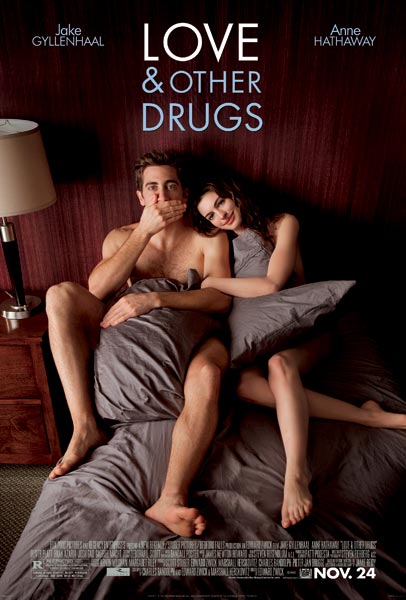
In this scene, our leads Jamie (Jake Gyllenhall) and Maggie (Anne Hathaway) are lounging around in a post-coital fugue, talking about… well, it doesn’t really matter: every line of dialogue in this film falls like lead shot from the lips of the cast, usually hitting the ground with a muffled thud, occasionally creating a clanger that will endure until the sun grows cold (“She’s Thai. And I’m Thai-curious”). But here they’re both rolling around on the bed with a – for Hollywood – surprising ease as far as nudity (mostly Hathaway’s) goes, creating an atmosphere that we don’t often get in western films. Two people who seem to like each other have just had sex, and now they’re soaking up the afterglow.

It only seems like a smart moment in the context of prudish western film-making, with its L-shaped sheets and one-time-only kisses. It that context, even this film’s depiction of a kind of relationship that we all know from real life but never see on film – a relationship built almost entirely (at first) on sex – seems daring. But being the world’s tallest dwarf is nothing to be proud about, and this one brief moment of relative humanity only makes the robotic dreck that surrounds it all the more painful.

Story-wise there are actually two stories going on here: one involves Jamie’s efforts to become the best-darn salesman for Pfizer he can be, but you needn’t pay too much attention to that one because the film is set in the mid- to late-1990s so along comes Viagra and even the most disinterested Sportsgirl salesgirl could sell that. It’s actually hard to remember a recent mainstream film where so much effort is devoted to such a major plot thread that ends up going nowhere: it’s not like he’s a slacker who lucks into a product that sells itself, or a loser whose career is saved by this awesome self-selling product – he’s a good salesman, being a good salesman is important to his self-image, and then this drug comes along that takes away all the skill and ability from his profession and… it just doesn’t matter. His arch-nemesis in drug sales vanishes from the film, his co-worker (Oliver Platt) gets half a scene at the end that means nothing –

[Actually, let’s explain that: Platt wants to be a success so he can get a gig back in Chicago close to his family, and he thinks Jamie’s slick ways will get him there. Platt’s character pops up every now and again to crack wise and dispense job tips, Viagra comes along and it’s money in the bank, and then we get a scene where we learn that Jamie is going to Chicago but Platt’s character isn’t. Viagra sells itself (or so we’ve been told), so why is Jamie getting a bump over his more senior colleague? No doubt there could be a dozen reasons, but the only one we’re given (sez Platt: “they need me here”) is presented as nothing more than excuse-making by a broken man. It’s a sign of how sloppy this film is: Jamie strives for success in a world where things happen for no reason, and yet we’re still expected to care about his success.]

-and otherwise, a few cheap and nasty gags about how drug salesmen work aside, this side of things adds up to nothing more than a bauble Jamie can throw away at the end to prove how much he loves Maggie. Because that one brief, mostly-naked bedroom scene aside, this is the kind of romantic comedy that runs on rails to a destination that only looks attractive from a long, long way away.

We learn three things about Maggie when we first meet her in a doctor’s surgery: she’s sassy, she has early-onset Parkinson’s Disease, and she’s got nice breasts. Surprisingly, of those three things it turns out that being sassy is the least important, as, after some slightly more spiteful than usual banter, she promptly invites Jamie home to her sweet loft for some no-strings sex, which soon becomes a regular event. The frequent sex is another thing that might fool more gullible viewers into thinking this film is smarter than it actually is: whereas most Hollywood rom-coms restrict the sex scenes to one or (if they need to have the sex interrupted comically or start to go bad) two, this keeps ‘em coming well past the usual cut-off point.

The film makes no secret of the link it’s forging between her free-wheeling sexual ways and her illness. While it’s possible to see her illness as some kind of punishment for being a young woman who likes sex, lets give this film the benefit of the doubt and say that her illness (and awareness that for her, life as an able-bodied person is short) fuels her hunger for sex. It doesn’t fuel her appetite for much else tho – she’s an artist, she works in a café (good job paying for the sweet loft on that wage, especially as she can’t afford drugs and has to go to Canada on a bus for the cheap stuff), and there’s not a single “look at me and all the things I’m trying to cram into my life” montage anywhere to be found. She just likes to fuck. A lot.

Which, when you think about it, is pretty fortunate for her. After all, why else would Jamie want to be with someone with an incurable illness unless she was constantly up for it? There’s nothing else to her character her to suggest any other reason for him to fall in love with her, after all – she’s constantly pushing him away verbally, she’s got the whole illness thing going on – if she didn’t want to sleep with him all the time, why would he bother hanging around? Don’t blame me if this sounds offensive: while it may be possible to come up with another reading of the situation here, it’s hard to ignore the way this film constantly re-enforces the sexual nature of their relationship in a way that most other Hollywood romantic comedies and dramas don’t. Considering there’s almost nothing else to her character, it’s difficult not to read this as “hey, why else would you fall in love with a Parkinson’s sufferer?”

Offensive to both men and women this undoubtedly is, but at least it fits in somewhat with the jerk Jamie seems to be. And in some early scenes together their horrible, stilted, clichéd dialogue almost makes sense: he’s a heartless jerk, she’s a victim desperately trying to keep life at arm’s reach, no wonder their dialogue sounds clichéd: they’re both saying things they don’t really mean about emotions they’re not actually feeling. But then everyone sounds that bad all the time in every situation and it turns out the script is just really poorly written. Oh well.

Sadly, this film dubious approach to Parkinson’s doesn’t stop at the suggestion that the only way a sufferer can hope to get a man is by being extremely hot and sexually available. For a while its lightweight and unrealistic approach to the illness, while kind of annoying, is no more annoying than anything else here. She’s sick, only she’s the kind of sick that doesn’t actually seem to have any real affect on her life; oh well, back to bed we go. But then she goes to a meeting of Parkinson’s sufferers – presumably played by actual Parkinson’s sufferers – and things take a turn for the offensive. It’s one thing to drag an actual illness into a fantasy rom-com: it’s another thing entirely to try and justify it by bringing out actual real-life sufferers to bolster your offensive drivel.

[not to mention it’s a completely pointless scene: supposedly it empowers Maggie to take control of her life and illness, only to then be followed by a series of scenes where Jamie drags her around to doctors and clinics desperately trying to find a cure. Girl power!]

The result is a film that constantly plays around with elements it has no idea how to use. Time and time and time again it throws up a scene or idea that could be interesting, only to run away from the implications as fast as it can. Jamie and Maggie’s relationship can’t stay no-strings, it has to become a traditional rom-com relationship right down to the last minute dash by one partner to chase down and win back the other – seriously, in 2010 someone still thought this was a good way to end a movie.

We’re constantly told that there will be no cure for Maggie’s illness, but then we’re never shown her actually falling ill: the film’s final moments are just a touchy-feely montage, despite the fact that it’s set in the late 1990s so jumping forward to the present day would seem like the most logical ending in the world. Even if it was just to show Jamie still lovingly caring for a disabled Maggie, that would still be marginally more confronting that the total avoidance of the issue that this film serves up.

But surely there’s at least a few side elements that don’t completely stink up the cinema? Hell, no: from a totally insane running gag about a crazy homeless man who gets his life together thanks to taking anti-depressants he steals from a dumpster – which might have been funny in an Airplane!-style slapstick film, not a supposedly cynical real-world drama – to the amazingly unfunny no-name brand-Jack Black role of Jamie’s brother, this is all-to-wall painful.

This is, after all, a film whose idea of comedy is to have Jamie come home to find his brother – a former internet millionaire whose career has gone so far down the toilet he now lives with his brother, where his mission in life is to act like a total dipshit and whose character arc concludes with him discovering that he doesn’t actually like meaningless sex – masturbating to a sex tape Jamie and Maggie made. That’s right: he’s beating off to a tape of his own brother having sex. It’s very, very, very difficult to think of a film in which this kind of thing might be seen as comic relief. Salo perhaps?

By the end it’s hard to figure out why anyone involved thought this was a good film to make. It’s not like they’ve shown any real desire to follow through on any aspect of the story that’s being told. The relationship is blanded out as fast as possible, Jamie’s personal issues are totally glossed over or ignored, his career turns out to have meant nothing, the idea of actually educating the audience about how drug sales work in the US medical system is barely touched upon and then only in the most benign fashion, any possibility of a Vigara-based sex-farce is quickly squashed (there is one scene where Jamie rushes to the emergency room with an erection that won’t go away, but we never see the offending boner – or even a decent laugh-getting bulge in his shorts – and the scene just… ends, with no punchline beyond a nurses’ eye-rolling), Maggie’s character quickly degenerates into yet another mildly whiney victim who’s biggest problem isn’t the incurable and debilitating illness she suffers from but that she’s “afraid of love” (sigh), and the whole things ends in a way that leaves little more than the impression the film-makers had no idea how to end things.

This is a film where one lead suffers from a terminal illness but we hardly see her getting ill; the other is supposedly a self-absorbed, sex-obsessed cad who somehow becomes a devoted, self-sacrificing boyfriend at the earliest possible opportunity. A medical system run by drug salesmen is nothing to worry about, success in your career means nothing and has nothing to do with you anyway, drugs have no down side that isn’t funny and coming home to find your brother masturbating to a tape of you having sex is a minor glitch. Man, I need a drink.

Anthony Morris

Friday, 10 December 2010

In The Company Of Men: professional film reviewing in Melbourne


(warning: this column contains no mention of the film In The Company of Men. Which is a shame as it's a great film)


Who knew that seeing movies for free and then getting paid to tell people what you thought about them was a job that required a penis? Okay, maybe it doesn’t (unless you’re reviewing the films down at the Shaft cinema), but you’d be forgiven for thinking otherwise if you’re getting your reviews from the Melbourne media.

Some context for this outlandish statement: at The Age, of the five regular (well, four and Craig Matheson, who’s the regular fill-in) film critics, one (Phillipa Hawker) is a woman. At The Herald-Sun, the two critics – the omnipresent Leigh Paatsch and Sunday’s McEachen , who is based in Sydney - are male. At the two street papers, the film critics – Greg King at Beat, Anthony Carew at Impress – are male. The host of RRRs Film Buffs Forecast is male, as is Thomas Caldwell, the reviewer on RRR’s The Breakfasters. Triple J’s film reviewer until the end of 2005 was the (mostly) Melbourne-based Megan Spencer; she was replaced by the Sydney-based Marc Fennell (who also reviews on the Melbourne-based morning show The Circle). Luke Buckmaster writes about film for Crikey.com; Sean Lynch reviews for Web Wombat.com. As they say, the list goes on

[In the interests of full male disclosure, I review films for Fairfax website The Vine.com, The Big Issue, and the Geelong-based street paper Forte; the other Geelong-based film professional critic is The Geelong Advertiser’s Guy Davis]

Thankfully, the Melbourne reviewing scene isn’t entirely devoid of women; my co-blogger Rochelle Siemienowicz is the film editor at The Big Issue, where Melbourne-based reviewers Tara Judah (who’s also appeared on Film Buffs Forecast) and Carly Miller also appear, while Clem Bastow has proven to be a passionate advocate for film at The Vine. But Rochelle’s day job has reduced the amount of time she’s had to write reviews in recent years, Tara recently returned to Melbourne after a number of years overseas, and Clem only started reviewing films in 2010. That’s right: this is what a good year looks like when it comes to female film critics in Melbourne.

[despite my best efforts, no doubt I’ve overlooked some female critics, including Sydney-based Big Issue regular Alice Tynan. So for balance I left a few males off the list as well.]

What makes this imbalance even harder to explain (unlike, say, the gender imbalance in sports reporting) is that pretty much every single job related to that of film reviewer seems to have a far more equitable gender balance. Obviously, plenty of women are actors (not as many are directors, but they’re there too), and loads of films are aimed primarily at women. Beyond that, film publicists are almost always women; in my 15 plus years of reviewing I can count the number of male publicists I’ve dealt with on a regular basis on one hand.

Entertainment editors are often women: at the moment I work with female editors at all three venues I regularly submit film reviews to, and at The Big Issue the other three arts editors (I handle DVDs; they cover books, film and music) are women. The current editor of The Age’s EG is a woman, as is the entire editorial staff of that paper’s Saturday supplement A2 (books editor aside); for many years Claire Sutherland was the editor of The Herald Sun’s Hit section.

Out in the writing world, entertainment writers across the board can be and frequently are women: Stephanie Bunbury writes pretty much all the Schembri-free in-depth film stories in the A2, EG and elsewhere in The Age, while Neala Johnson has moved across from music writing to handle film interviews at The Herald-Sun. Music is slightly more male dominated, but even there high-profile women aren’t hard to find: the current writer of the EG’s Sticky Carpet column is a woman, for one.

Even in reviewing that other realm of images on a screen, television reviewers are often women. The editor of The Age’s Green Guide is a woman; of that paper’s three television columnists (Green Guide, A2, Sunday Age), two are women. While the Herald-Sun’s daily television reviewer is male, as is the editor of the Herald-Sun’s TV guide, that guide’s sole television columnist and reviewer is Diane Butler.

[In fact, the only area of television reviewing that is male dominated are the movie reviews: Leigh Paatsch does them for the Herald-Sun, and when Scott Murray isn’t providing them in the Green Guide, Craig Matheson steps in.]

To be fair, perhaps all this (clearly anecdotal) evidence means nothing. Perhaps there is no real overlap between those positions and film reviewing and I might as well be discussing the gender of the projectionists and popcorn sellers. But let's pretend all this does mean something: so where are the female film reviewers?

Part of the problem is simply that there aren’t many film reviewers full stop: in Melbourne – and therefore all of Victoria – you’d be lucky to find five people making a full-time living from reviewing at any one time. And since at least the turn of the century three of those people are Tom Ryan, Jim Schembri and Leigh Paatsch.

Film reviewing is not a job that has a high turnover either; critics are generally seen to get more authoritative as they age (unlike, say, music writers, where youth is often an advantage), so once someone scores a good job, either they leave in a hurry (upon discovering it’s not for them), or they don’t leave at all. So unless some new high-profile positions are created, or someone (God forbid) falls under a bus, there isn’t going to be a shift at the top of the ladder in Melbourne any time soon.

That said, this is an issue that extends all the way down the line. There simply aren’t that many women turning up to media screenings to review films in a paid capacity. So what might be the factors that are keeping women away?

It could just be the obvious: film reviewing is poorly paid, often erratic work that requires you to be available at short notice to attend screenings at inconvenient times. But wouldn’t that keep men away as well? In the wider scheme of things, that kind of job description would make it more likely for women to be involved, not less. Maybe it’s the reverse: film reviewing is seen as a fun, glamourous, cushy job that everyone would grab with both hands given the opportunity. But if that’s the case why aren’t more women going for it, considering their prevalence in related fields and seemingly similar fields of review?

Let’s take a different tack. Based on my half-arsed observations, “film critic” doesn’t seem to be a job for the young – while there are a number of reviewers for community radio and small publications on the far side of 50, reviewers under 30 are pretty rare (I started when I was 22; to the best of my knowledge, I was the youngest regular professional film critic in Melbourne until I was well into my 30s, though there are more reviewers under 30 now). I have no idea why: maybe they have to go through an academic career studying film before they can review Jackass 3D; maybe they need to spend five years as an accountant before realizing film is their one true love.

Based on that, here’s a supposition: if film reviewing is a job that, with notable exceptions, requires an age with at least a “3” at the front, maybe the reviewing door is opening just at the time when wanting to have a family might come to mind? Obviously not for every woman (it’s a pressure that would apply to men too, and there have been stay-at-home dads who’ve juggled reviewing careers), but it could make the numerous downsides to reviewing loom large – and in a field as small as professional film reviewing, if it puts one or two people off, that could make a big difference.

Film reviewing is fairly unfriendly to family commitments in general, what with odd working hours, often last-minute deadlines, low pay, and so on. Running all over town catching movies while pregnant wouldn’t be fun, and with a child it would be all but impossible to go to screenings on a regular basis without some serious child care (I do remember one female critic who used to bring her baby to screenings years ago… that didn’t really work out ). Not to mention that other media jobs – television reviewing, for example – can be done from home, while movie reviewers actually have to physically go to the movies. So perhaps for women working inside a large media organization a film reviewing job just doesn’t look as enticing as covering other forms of media - especially if the jobs just aren't available in the first place.

After all, the current chances of getting to the top - “the top” being a living wage - are pretty slim whatever your gender. Schembri’s been at the Age for over 20 years now, with no sign of leaving (and if he did, he might not be replaced: four reviewers at one newspaper is a lot), and Paatsch could easily be at the Herald-Sun for another thirty years. hanging around waiting for someone to step aside to make a living wage at reviewing is a pretty thankless prospect whatever your gender: any additional pressure finance-wise certianly wouldn't encourage women to stick around.

But why stop there with the wild theories. Most of the current crop of reviewers, even the ones in steady work, started off freelancing. Could it be that freelancing itself isn’t female-friendly? Well, it does have crap hours and low pay, but so do a lot of other writing gigs that seem to attract women just fine. Freelancing is competitive, but one way to get started in the reviewing field in the past was to work in PR and make enough contacts so that the move to freelancer came with a certain amount of locked-in work. Film PR is a field dominated by women, yet none of them seem to want to (or be able to) cross the street.

Maybe film reviewing is seen as the province of creepy male nerds, thus putting off women? Probably not – there are plenty of female film bloggers out there and they don’t seem deterred by howls of outrage over the latest Spider-Man casting decision. Maybe men have more free time to go to media screenings? Well, having a supportive partner (or family) is pretty much vital if you’re not making a living wage (which again, most people don’t) as a full-time critic. Are women more likely to support their men in their crazy dream of telling the world what they thought of Love and Other Drugs? Could be.

Maybe it’s a top-down problem. Perhaps film reviewing is seen by the (always male) chief editors at major newspapers - or was seen a decade or more ago, when the current lot of big names started work – as “man’s work”. That is to say, film is a proper artistic field that demands serious consideration from a serious (read: male) writer, unlike frivolous entertainments like television or pop music. This seems the most stupid theory, so there’s probably some truth to it.

If that theory was true in the past (surely it couldn’t be true today?), maybe it’s simply a matter of attitudes not shifting far enough in time? Could the only real difference between film reviewing and television reviewing in Melbourne’s daily newspapers in 2010 be that the old film critics moved on or died in the early to mid 1990s, and so were replaced by the men who hold those jobs today, while the old long-time television writers (Ross Warneke at The Age, Robert Fidgeon at The Herald-Sun) held on until the 21st century, and so were replaced by women when they finally shuffled off?

Clearly I have no real idea. And obviously whether any of this is a problem depends on whether you think the gender of a critic is important. If it’s not, sorry to have wasted your time. If it is, is it more important than experience? Can an experienced reviewer transcend gender to write reviews that see past those issues, or will they always have blind spots they can’t address? Is it a problem when only male voices are reviewing the latest chick-targeted Katherine Heigl rom-com, or does that film’s sheer awfulness transcend gender? And is it ironic that a man wrote this article, or does my girlish figure make up for it?

Anthony Morris

Monday, 6 December 2010

News You Can Use: AFI on TV


Australia's most prestigious movie awards returns to television this Saturday night with Channel Nine broadcasting the 2010 AFI Awards from 9.30pm. Hosted by Shane Jacobson (Kenny) at Melbourne's Regent Theatre, it promises to be a night filled with stars from both cinema and television saluting what's been a bumper year for both forms of entertainment locally.

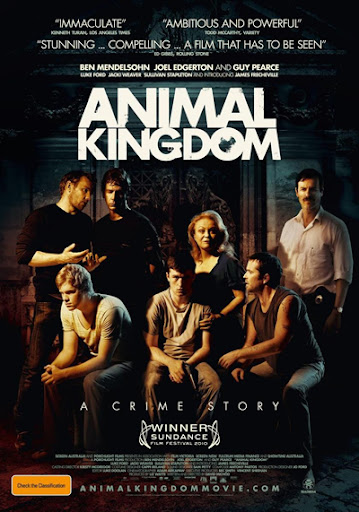
A close to even share of representation across the feature film category reflects the impressive line up of contenders, with 10 feature films out of a possible 16 receiving nominations. Animal Kingdom, the debut feature film from Director David Michod, has had a standout response, receiving a record breaking 18 nominations across all categories it was eligible for, including the prestigious Samsung Mobile AFI Award for Best Film. Across its talented ensemble cast, actors Jacki Weaver, Ben Mendelsohn, Joel Edgerton, Guy Pearce, Sullivan Stapleton and Laura Wheelright have all received nods, with newcomer James Frecheville receiving 2 nominations for Best Lead Actor and AFI Young Actor Award.

Beneath Hill 60 has also been highly recognised with 12 nominations in total, including AFI Members' Choice, Best Direction, and all categories across the technical awards. Brendan Cowell is in the running for Best Lead Actor, and newcomer Harrison Gilbertson has taken away a nomination for the AFI Young Actor
Award.

Bright Star, Tomorrow When The War Began, Bran Nue Dae and The Tree have all received an impressive number of nominations, proving popular with audiences and their industry peers alike. The Boys Are Back, Daybreakers, Matching Jack and The Waiting City complete the roster of local productions that are in the running to take home one of the country's most esteemed annual screen industry awards.

A top billing of Australian actors have been recognised for their work in the international arena, with Simon Baker (The Mentalist), Ryan Kwanten (True Blood), Kodi Smit McPhee (The Road), and Sam Worthington (Avatar) in the running for AFI International Award for Best Actor. Toni Collette (United States Of Tara), Bojana Novakovic (Edge Of Darkness), Mia Wasikowska (Alice In Wonderland) and Naomi Watts (Mother And Child) have received recognition in the same category for Best Actress.

There's also a bumper crop of television nominated this year, with Network Ten's telemovie Hawke leading the way with 6 nominations, including Best Direction and Best Screenplay as well as Lead Actor in a Television Drama for Richard Roxburgh. Tangle from Showcase has received 5 nominations including Best Television Drama Series, and nods for Best Lead Actress for Justine Clarke and Catherine McClements. Best Television Comedy Series has been equally dominated by the ABC's Review With Myles Barlow and SBS's Wilfred II with three nominations each, and the ABC's Lowdown taking two nominations, while the nominees for Light Entertainment Series include The Gruen Transfer, Hungry Beast, MasterChef Australia and Talkin' 'Bout Your Generation.

For more information and a full list of nominees from all feature film, television and non feature categories, visit www.afi.org.au

Anthony Morris

Thursday, 25 November 2010

Mood Swings and Roundabouts: Due Date


When The Hangover hit big, it was a bit of a mystery to a lot of comedy fans. Sure, it was mildly funny, but weren’t we in the middle of a golden age of big screen major funny coming out of the US? Not if you liked your comedy simple and straightforward we weren’t, and so while once sure-fire hitmakers like Judd Apatow (with Funny People) and Will Ferrell (Semi-Pro) struggled at the box office with something a little different from the norm, The Hangover went big because it did exactly what it said on the box. Forget layering in serious drama or pushing stereotypical characters to the limits – this was a film where a bunch of loveable douchebags had wacky adventures, often involving naked Asian men or injuring a baby.

So approached from that angle, it’s more than a little surprising to discover that Due Date is – you guessed it – a film that layers in serious drama and pushes stereotypical characters to their limits. Not that it looks that way at first: Peter (Robert Downey Jr) is an uptight middle-class professional trying to fly home to L.A. in time for his wife to give birth to their first child. Ethan Tremblay (Zach Galifianakis) is a would-be actor and serious tool who screws up Peter’s plans by getting them both thrown off the plane. Two words: road trip! Oh wait, didn’t director Todd Phillips direct Road Trip back in 2000?

That’s an important element in Due Date’s construction that’s been glossed over with all the “by the director of The Hangover” publicity here: Phillips has been making comedy for well over a decade now, which in Hollywood terms makes him an old hand. Once you’ve made films like Old School and Starsky & Hutch, it’s hardly surprising if you start to seem a little jaded when it comes to getting laughs.

While Due Date’s basic plot promises the trad comedy riffs that made The Hangover so popular – and plot-wise it does tick all the road trip boxes, with various one-off wacky encounters with big name cameos (Juliette Lewis, Jamie Foxx, Danny McBride) and the usual car-crashes and quick getaways (oddly, no encounters with hot chicks tho; this is strictly a bromance) - where it diverges from the well-beaten track is in the characters of Pete and Ethan.

On the surface the double-act of a straight-laced uptight type and a freewheeling arty guy is about as old as they get. But instead of keeping them soft around the edges, Phillips pushes them about as far as they’ll go. Ethan is an annoying, pretentious moron, so we side with Peter – after all, he just wants to get home to his wife, while Ethan wants to go to Hollywood and become an actor, complete with wanky scarf, little dog and obsession with Two & a Half Men. Then Peter turns out to be the kind of guy who’ll gut-punch a little kid and spit on a dog, and we’re off into uncharted territory.

But that’s not exactly true, is it? There’s a long tradition of comedians deciding that this whole “comedy” thing is getting a bit boring. Peter Cook and Dudley Moore doing “Derek & Clive” is a prime example, where they pushed their usual double-act into a dark and obscenity-packed world simply because they (well, mostly Cook) were tired of just going for easy laughs. It’s a different thing to the trend for “dark” comedy in the early part of this century too: that was / is often about trying to get laughs from taboo subjects or being weird for weirdness’ sake. This sticks close to the road trip formula, generally plays it safe (drinking a dead man's ashes by mistake is about as taboo-busting as it gets) and is overall a lot less weird than a lot of mainstream US comedies – Step Brothers or Hot Rod are both a lot stranger (and funnier) than this.

Due Date is simply a film that often feels like it doesn’t care if you’re going to laugh at its characters or not. Yes, there are plenty of jokes and wacky set-ups, and excellent performances from Downey and Galifianakis; there are also a lot of mean, unpleasant or just plain dull moments, usually swiftly followed by an attempt to pluck at the heart strings (Ethan’s dad just died; Peter really wants to be there for the birth of his first child) and keep the audience on side.

It’s usually hard not to applaud someone trying to push a boundary or two with their film. In Due Date’s case though, for every step forward there’s a quick shuffle back followed by someone’s arse getting kicked by a war vet in a wheelchair. If there’s a reason why this patchy and uneven film really never comes together, it’s there: rather than having the courage to make its unpleasant characters seriously and consistently ugly, it’s constantly having them act like jerks then pulling back, right up until an ending that tries to pull off the “aww, now they’re best buddies” vibe but can’t make it stick and just gives up. We’re supposed to feel that they’ve mellowed towards each other bromance style for that warm, fuzzy feeling as we leave the cinema, but the tone of the film’s been so uneven for so long that the feeling we’re left with is that five minutes after the end credits one of them would be shitting in the others hat.

Anthony Morris

Thursday, 18 November 2010

The Prisoner of Adaptation: Harry Potter and the Deathly Hallows


How do you judge a film adaptation of a novel when the novel isn’t all that good? Because much as we’d all like to think a film stands alone in the audience’s mind, when you start to get down the best-seller end of things it’s impossible to deny that for a lot of people what they’re coming to see on the big screen is the book. But what if staying faithful to the book results in a bad film?

The big problem with Harry Potter and the Deathly Hallows isn’t that it only adapts the first half of the novel. On that level it actually works fairly well, ending on an ominous note without going flat-out for a cliffhanger, while the story structure – slam a whole bunch of action right up the front, then have our heroes on an extended camping trip for much of the second half – works just fine. It doesn’t even feel unbalanced dramatically: the slam-bang chases and attacks early on simply happen to the leads, while the countryside wanderings provides a chance for them to reflect on what they’re going through – the second half is when all the action actually has an impact on them, so in that sense there’s a balance to it all even if it feels a lot quieter.

The problem comes from J.K Rowling’s amazingly lazy plotting. Forget the now-typical “we’ve got to find this character that’s never even been mentioned before RIGHT NOW!!” moments and quests for amazingly powerful items no-one’s bothered to bring up once over the previous six books: There are at least two super-powered magic items / characters on the side of good who can literally turn up anywhere at any time. How can there be any sense of effort on the part of Harry and his buddies when, whenever they’re in a jam, something literally appears out of nowhere to help them? Of course the story up until now has all been about magic, but at least then the quests involved actually looking for people and items: here Harry et al just wander around kinda hoping something magic will turn up to push the plot forward, and aren’t they lucky when it does.

This kind of thing doesn’t just make for lazy story-telling – plenty of equally lazy films are still fun thanks to big effects or great performances or snappy dialogue – it strikes at the very core of what the Harry Potter story is supposed to be about. It’s a story about a boy becoming a man (becoming a werewolf… sorry, that's a 30 Rock reference there) – basically, a quest for adulthood, preferably one where he won’t be threatened / killed by the forces of evil.

As such, and in contrast to a story about, say, surviving a shipwreck (where how you survive is important, but the story still works whether you survive by your own actions, are rescues, or just fluke it), it’s vital that Harry does his own heavy lifting. It’s his story, it’s about him, and we want to see how he overcomes the challenges put in his way – otherwise it’s just a story about some entitled chump with friends he doesn’t deserve.

When those challenges are defeated by “oh look, that magic sword that can appear anywhere at any time has arrived just in time” or “thank goodness Dobby the teleporting elf has arrived to help teleport us out of here”, anyone could do them. And if anyone could do them, why are we watching a movie about Harry Potter, especially as pretty much every single other character in this film is more interesting than he is? After all, they all have a goal – to either protect or harm Harry Potter. Potter’s goal is to, um… smash a bunch of magic amulets?

Of course, by the seventh film in the series chances are you don’t need to be convinced that Harry is worth paying attention to. And if he doesn’t do much of anything in this installment, presumably he’ll make up for it in the next. But it’s still disappointing because clearly the extended period of countryside wandering the three main characters go through is meant to be the last big chance for us to get to know them as people. No doubt in the final film there’ll be too much action and magic explosions and special effects for us to get much breathing space to take note of the kind of people we’re cheering on, but the camping sequences here – which serve much the same purpose of meeting up with friends at a pub for a drink or two before all going off to a concert where you’ll be doing something fun together but won’t actually be interacting with each other much – seem to be just an excuse to make people think “oh look, Harry’s not in Hogwarts any more”.

Again, it’s not the film’s fault. There just isn’t all that much more to J.K. Rowling's characters than “Ron is decent and loves Hermione but is a little scared of her and isn’t great with his emotions” and "Hermione is serious and smart and a bit of a buzzkill but kind of knows it so she’s likable anyway”. And Harry is the chosen one, so that’s him sorted then. Supposedly the magic amulet thing with part of Voldemort’s soul turns them all surly and evil from exposure, but it’s only really Ron who suffers seriously from this, and he only storms off in huff so he can come back - there's never any real sense that we're being shown any hidden resentments at the core of his character, and his belief that Harry and Hermione are secretly getting it on might have worked if Harry actually seemed like someone who'd ever really get it on with anyone.

(that said, How cool would it have been to see Hermione really crack it with the guys? Oh wait, that’s her regular personality 80% of the time. No wonder this stuff drags.)

The end result is a film that’s so off-the-boil weird – pretty much every big fight / attack scene and sequence has almost no impact, but the opening dinner table chat with the forces of evil is amazingly disturbing and effective even though they just really just chat – that it's hard to tell if it's the most interesting or the least interesting film in the series. Some major characters die off-camera: others’ equally tragic deaths are lingered over at tear-jerking length. Subplots progress in dreams, everything stops for a wedding between two characters who barely figure in the story and for an extended period our three main characters are wearing other people’s faces. If J. K. Rowling knew what she was doing, all this would make a lot more sense – and be a lot less interesting for it.

Anthony Morris

Thursday, 11 November 2010

For the Chop: Machete


Nothing lives without a heart - okay, plants do, and some real estate agents, but let's run with this metaphor - and while it might be small and withered even the exploitation film needs a heart pumping blood through its veins to stop it from being nothing but a lifeless automaton. Unfortunately, whatever his merits as a writer and director - and most of those merits seem to involve making good-looking films fast and relatively cheap - Robert Rodriguez isn't someone known for putting any kind of heart in his films.

Still, it’s not like the exploitation genre requires a big personal statement or anything, right? And Machete (based on a fake trailer made for his and Quentin Tarantino's uneven Grindhouse experiment) certainly manages to look like everything you could ask for in an exploitation film. The story is certainly trashy enough, as machete-wielding Mexican Federale Machete (Danny Trejo) sees his family killed in front of him by an evil drug lord (Steven Seagal) then turns up three years later as a day labourer in a Texan border town where the forces of immigrant-bashing evil (a vigilante-leading Don Johnson, Robert DeNiro as a crooked senator) are up against "the network", an organisation led by a taco-shack owner (Michelle Rodriguez) that helps Mexicans cross the border. Machete gets hired to kill DeNiro's senator as part of a re-election scheme, only when they double-cross him it turns out Machete is hard to kill - unlike pretty much everyone he goes up against.

This is hardly an abject failure. Certainly individual scenes are over-the-top in all manner of enjoyable and entertaining ways. Having Machete get it on with every woman he comes across to the accompaniment of a sexy bass line never gets old, and most of the many machete-based executions are laughably excessive - as are most of the scenery chewing performances, though Seagal's "Mexican" accent deserves special acknowledgment. So what more do you want from an exploitation film? They’re meant to be churned out quickly and shoddily, so as long as you tick the right boxes it should all work just fine, right?

In that light, the appeal of the exploitation genre for Rodriguez is easy to fathom. Even when he takes his time he films tend to feel rushed and shallow, as if he was bored with them long before it came time to actually make them (which might explain why he has a co-director here, and he handed off his Predators script to another director entirely). But it’s also a fundamental misunderstanding of the exploitation genre, which is why Machete never really works.

Exploitation films were made fast and cheap and typically couldn’t afford the usual audience draws: decent acting, smart scripts, big effects and scenes. So often they’d grab hot-button topics - “Ripped from today’s headlines” – to spice things up. Rodriguez understands that much, which is why his story is built around illegal Mexican immigrants. But he doesn’t have the courage of his exploitation conviction here: rather than actually tap into the fears and tensions around this issue by, say, having the Mexican immigrants be out-and-out evil (like the Cubans in Chuck Norris’ Invasion USA), or having the evil white folks be just plain evil, there’s a whole load of double dealing as just about every bad guy turns out to be either breath-takingly cynical and / or in the thrall of Seagal’s drug lord, who is safely Mexican (okay, “Mexican”), so it’s okay for whites to hate him. The hot-button issue is safely defused – no-one’s going to get riled up over this vision of American border policy – but it drains the drama and excitement from the film as well.

Exploitation works best when it works with black and white. You don’t watch a Death Wish film for a nuanced look at the social problems that cause street crime: you watch it because you want to see scum blown away. The hero’s character might be paper-thin, but there’s always just enough there to motivate their brutal actions. But despite having his family killed in the opening minutes of the film, Machete isn’t really driven by anything: the next time we see him it’s three years later and he’s working as a day labourer! That isn’t the actions of a man driven to avenge the deaths of his loved ones – and in fact, his family are never mentioned again. The hero is at the heart of the exploitation genre, but here he’s a void, an empty space around which the massive supporting cast swirl.

It doesn’t help that in trying to shoe-horn in every one of the moments from the original trailer, Rodriguez makes many of them seem rushed and flat. The threesome between Machete and the wife and daughter of the sinister Jeff Fahey should have been a high point of the story, a scene where our hero displays his total dominance over the villain. Instead, it’s a throw-away scene that comes out of nowhere and means nothing. Same for Machete surfing an explosion on a motorbike with a minigun bolted to the front, same for Linsay Lohan as a killer nun, same for pretty much every cool moment in the original trailer. They’re all here, but they don’t mean anything.

Machete ends up a film that sounds cooler than it is. Even the trashiest exploitation films gave you a reason to care about – or be horrified by - what was going on: for all the blood splashed about on screen, this remains a disappointingly lifeless affair. Still, if nothing else, it remains a film you could make an awesome trailer from… oh, wait.

Anthony Morris

Wednesday, 3 November 2010

Hicks In Stix Nix Pix: American: The Bill Hicks Story


Bill Hicks is a man with a church going up around him, and for some of us that doesn’t feel right. There are biographies of him; there is a book collecting his stand-up routines, interviews and articles; there are DVDs of his shows and about his life; the four albums he recorded during his life have been re-released and re-packaged numerous times, while other live shows (both official and bootleg) are also available. Funnier comedians and more popular comedians haven’t experienced nearly the range and depth of examination that Hicks has, nor have they received the same level of near-universal acclaim. So for some of us, the question going into American isn’t so much “will it be any good?” as it is “how much more hero worship does a dead guy need?”

For Hick’s “true” fans, the ones that believe he had a unique message to spread that went to the core of America and life itself, too much is never going to be enough. Parts of Hicks act played into this: for a comedian he certainly wasn’t above taking himself seriously when it came to the spiritual side of life. But blind hero-worship doesn’t really do him any favours either. Yes, he had a lot of insightful things to say about drugs and politics. He also made a lot of dick jokes. The dick jokes were usually funnier.

So for starters, it’s a relief that this film isn’t packed with celebrities talking about how amazing he was and how influential he is. Instead, this uses archival footage – Hicks recorded a lot of his work himself – interviews with family and (actual) friends, and bursts of animation to put together a comprehensive picture of his life. Like a lot of creative people, that life isn’t all that exciting: basically, he wanted to be a comedian a whole lot and he worked really really hard at it, while also getting stuck into booze and drugs for a while.

Unfortunately for those interested in the comedy side of things, Hicks’ persona requires that his material be largely presented as an amazingly ground-breaking surge of unspeakable material telling truth to power, rather than an offshoot of where American comedy was heading after the boom of the mid-to-late 80s. That’s not to say Hicks’ didn’t break ground in his own way, but in much the same way as Nirvana was the highly visible tip of a growing movement in music at around the same time, so too Hicks was a comedian who – after a lot of time touring and honing his material waiting for things to come his way – would have found America had come around to his way of thinking… if he hadn’t gone and died of cancer in 1994.

It’s possible to argue – not that this comprehensive but understandably uncritical documentary does so – that dying young and having his segment cut from the David Letterman show less than a year before his death were bigger factors in his posthumous fame than anything he actually said or did on stage. They shape the narrative of his life into something saleable: here was a comedian who, after years on the road and clearly no-longer giving much of a shit about saying anything but what he wanted to say, had come up with an act that expressed a lot of discontent with the way things were. Then, just when it looked like he was about to finally reach a wider audience with his act, corporate America censored him – proving his point about America - and he died.

Without those two things – the latter of which had nothing to do with his actual act (unless you think performing stand-up comedy gives you cancer), the former of which isn’t exactly unheard of in the world of American television – you couldn’t make a documentary like this. That doesn’t make it a bad film by any means. It just means that, on some level, it’s a film about a man who’s life is a good story, not the story of a man who led a particularly good life.

For example, when the press release for this film (currently showing at Melbourne’s ACMI) says “[Hicks] was poised to become a major voice in America when in June 1993 at the age of 31 Hicks was diagnosed with pancreatic cancer”, it’s not exactly a controversial statement amongst his fans (the "major voice" part that is - there's no debate at all about the cancer). Trying to predict what might have been is a mugs game, but the reality of comedy in America at the time of Hick’s death suggests he may have already peaked: the stand-up boom of the 1980s was all but over, and the biggest name in comedy at the time was Jerry Seinfeld. Unless Hicks made an unlikely move to television – Wayne’s World aside, comedy film in Hollywood wasn’t really thriving for most of the 1990s – he would have most likely found his US opportunities drying up. The next big thing in comedy wasn’t Hicks-style, “tell-it-like-it-is” material (even notorious Hicks-a-like Dennis Leary jumped off the comedy bandwagon for bad movies throughout most of the 1990s), but Friends; Hicks might have enjoyed George Carlin-like success to this very day, but Carlin died a year or so ago and no-one’s rushing out a movie about his (long & very interesting) life.

Put another way, one of the more obvious things to say about Hicks' stage act is that he liked to present himself as a cross between a rock’n roll legend (all those Hendrix references) and a preacher; the now all-but-forgotten 80s comedian Sam Kinison not only was an actual preacher before he became a comedian, he appeared on stage with rock bands and recorded below-average (but in one case, best-selling) singles. He said controversial things (one of his better-known rants was about how, instead of constantly sending food to Somalia, we should move the Somalians someplace where they wouldn’t constantly need food) and died young(ish) in a car crash in 1992. But he was also popular with the Andrew Dice Clay crowd of sexist frat boys, his crap music was high-profile (unlike Hicks’ below-par music on his CD Arizona Bay) and so hard to gloss over, and no-one tried to censor him. So no books, movies and adoring post-grave fanbase for you, Mr. Kinison.

None of this is to downplay Hicks’ skills as a comedian, and the parts of this documentary that focus on his comedy material are easily the most interesting. But it’s important to realise that for all his good work Hicks’ success from beyond the grave has more to do with factors outside his act, factors that enable people to package him as an easy symbol of rebellion, factors that don’t make him a better performer or human being. This is a solid, informative documentary that’s a great introduction to Hick’s work and full of footage that’ll be of interest even to long-time fans. It’s just a shame that a lot of other comedians who were (and are) just as funny and insightful don’t get the same treatment.

Anthony Morris