Search This Blog

Wednesday, 29 March 2023

Review: Dungeons & Dragons: Honour Among Thieves

The reason why a lot of sword & sorcery-style fantasy films fail is that they have to do a lot before they can even get going. They have to establish a whole world, plus the characters, plus a bunch of other stuff (how does magic work? What's the deal with weird creatures?), and they have to do so in such a way that the plot isn't going to seem silly. Most of these movies are built around quests, but unless you really establish the stakes behind that quest, you're just looking at people wandering around some made-up place trying to find some made up thing.

All of this is difficult but hardly impossible. What is impossible - or would seem to be if you still remember fantasy stoner comedy Your Highness - is doing all that in such a way to make comedy possible. Which is a problem: comedy is essential to a Dungeons & Dragons movie, because if you've ever played a session of D&D you know that people mess around and make jokes.

The central plot in Dungeons & Dragons: Honour Among Thieves is basically to reunite a family, which adds a bit more heart to what is otherwise a series of quests to get magic objects and loot treasure (classic D&D). There's also fights, with magic and without, plus some classic monsters (an Owlbear! A Gelatinous Cube!) and a pretty bulky dragon. D&D (the game) isn't really about defeating evil schemes so much but there's one here and it's satisfyingly sinister - in short, the story ticks all the boxes without feeling like an exercise in ticking boxes.

More important is the tone, which Honour Among Thieves gets exactly right. The opening scene, which involves a bunch of (serious) backstory at a parole hearing while constantly undercutting the seriousness - it's also going to be an escape attempt of sorts - sets the level, and it doesn't put a foot wrong from there. They even get a good joke out of a bunch of brain eating creatures passing them by because they're not tasty enough to bother with.

The characters bicker and banter but not to excess, the adventure is more rollicking than nail-biting, and the performances are spot on. Everyone has good chemistry, and fortunately the fantasy genre is so jam packed with cliches this manages to avoid some of the more obvious ones (no weathered wizards here) while still feeling like it's firmly part of the genre. 

The fighter (Michelle Rodriguez) is gruff (and has a thing for halflings, who are not named and yes that is Bradley Cooper), the magic user (Justice Smith) is battling confidence issues, the shape-shifter (Sophia Lillis) is slightly more serious and mistrustful, and the Paladin (Rene-Jean Page) is extremely Good (at everything, including avoiding becoming the straight man for a bunch of jokes). You've even got Hugh Grant as a dodgy con man turned ruler who is a bad guy but the kind of bad guy who's up front that he's bad so you can't really hold it against him. He's a fun character, and he's not even central to the story.

Someone who is central is Chris Pine, despite playing a character - he used to be a kind of undercover ranger, then he became a thief, now he's mostly playing the lute - who is so superfluous other characters actually ask "why do we need you?" As he's shown in everything else he's done, he can be charming and lightweight while still delivering the goods dramatically when needed, and though his character really doesn't map onto Dungeons & Dragons (the game) at all, he brings that kind of "I'm the leader but I'm kind of crap but I'm still going to get the job done" energy that these kind of movies (*cough Guardians of the Galaxy cough*) love

For a movie that's over two hours it doesn't feel drawn out or excessive, and for a movie that leaves the door wide open to sequels the ending is satisfyingly conclusive. The real takeaway is that it's funnier than you might expect; would that all Hollywood adventures could get this many laughs out of resurrecting the dead.

- Anthony Morris

Thursday, 23 March 2023

Review: John Wick: Chapter 4

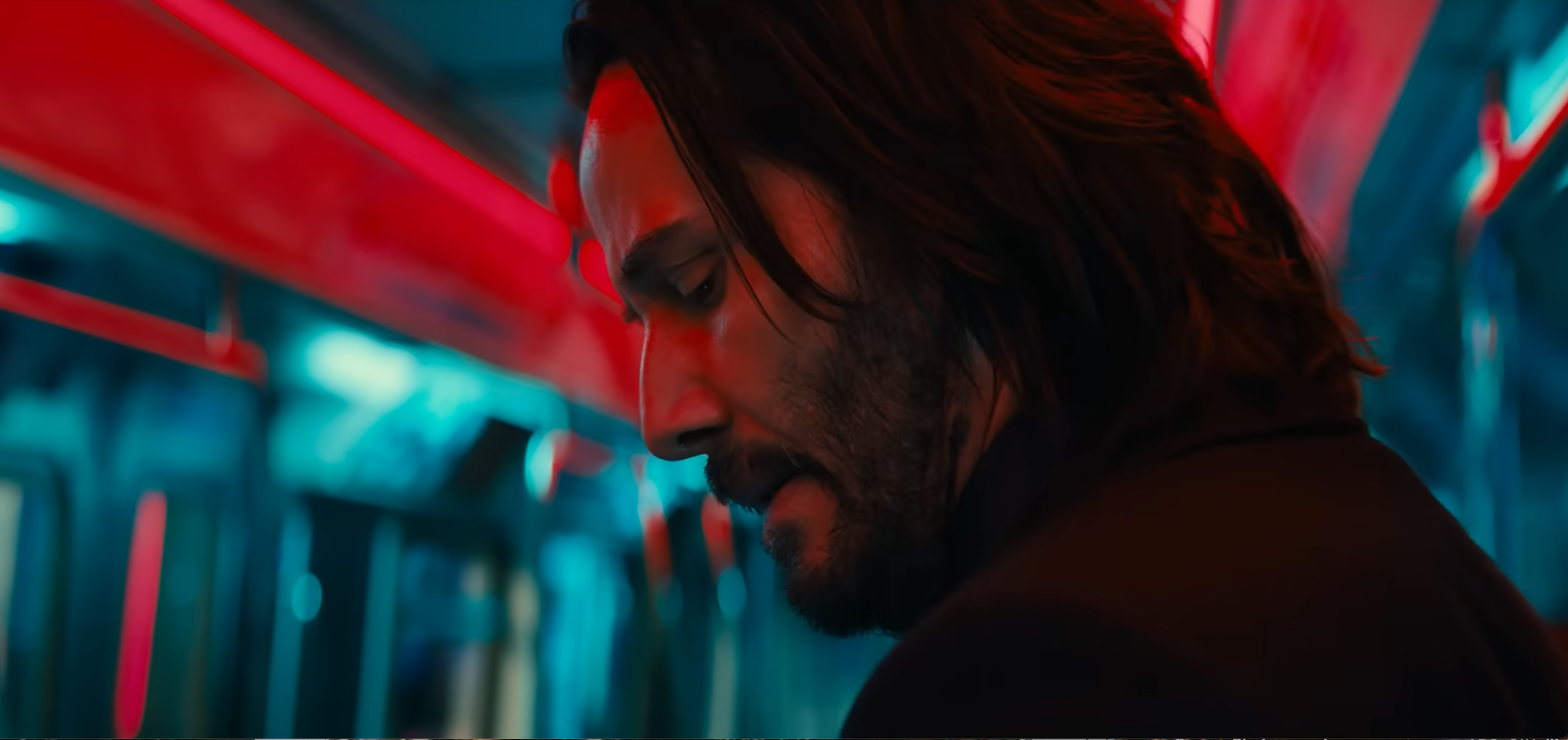
The best parts of John Wick: Chapter 4 are the parts where the franchise starts to fray. It's not news that John Wick (Keanu Reeves) is a killing machine of such lethal intensity that his fight scenes largely function as dance numbers in a musical: they're more about expressing and exploring a mood than driving forward the story. And the story here is thin even for a John Wick movie, with the moments between fights largely about moving characters from stand-off to stand-off. People will occasionally ruminate on death and endings, the way Wick can't escape himself no matter how many people he kills. It's all standard action movie stuff, dialogue that barely means anything - until it all clicks into place.

The virtues here remain the same, only more so. The locations (mostly neon-tinged, mostly at night) are impressive and well used; the escalation from the first film's fancy but plausible homes and abandoned warehouses to cavernous eurotrash nightclubs and Parisian landmarks has been well orchestrated. In the cast old favourites (Ian McShane, Lawrence Fishburne) provide old pleasures, while the newcomers - most notably Bill Skarsgard as new representative of the High Table / chief baddie Marchese Vincent de Gramont and the amoral tracker "Mr Nobody" (Shamier Anderson) - fulfill their roles with aplomb.

Previous installments have been happy to gesture towards the spaghetti western (most notably in the previous film where Wick puts together a revolver out of various substandard guns a la a similar scene in The Good, The Bad and The Ugly) but this fully embraces the genre. Enter Caine (Donnie Yen), a blind killer and old friend of Wick's who is forced to once again pick up the gun (if he doesn't, the High Table will kill his violin playing daughter) and could possibly be the only gunslinger who can take our hero down.

In earlier films care was taken to give Wick a savage beating or bad wound early on to explain why the world's deadliest killer had to work hard to take out dozens of disposable chumps (in the real world, being played by a man in his mid-50s was explanation enough, especially as Reeves is clearly doing many of his own moves and stunts). But here the film begins with Wick fully rested and recovered; his weariness now comes from someplace deeper, a realisation that maybe the blood on his hands won't wash off.

What makes the best spaghetti westerns work - and this is the best spaghetti western in a long time - is their willingness to go too far, to be epic in the service of material that lesser films would discard in a line or a scene. This film is intentionally too much of a good thing, everything dialed up to eleven in a way that reflects Wick's own exhaustion even as he beats down a dozen goons using nunchucks. You're meant to feel like this could have been a smaller film: the excess is the point.

(why else have a radio DJ providing a soundtrack and running commentary for Paris' hitman community as they try to take Wick down? It might seem like a reference to Vanishing Point's similar in-movie DJ Super Soul or the radio updates in The Warriors, but I like to think this version's choice of 'Nowhere to Run, Nowhere to Hide' comes direct from NWA's '100 Miles and Runnin')

Towards the end there's a visual joke about how Wick just won't stop even when all his progress is taken from him. It's a great joke: it's also a joke the series could only make with the end in sight. There's plenty of humour in the John Wick films if you know where to look (and you don't always have to look hard, as with Scott Adkins' Killa, a chunky bad guy who's yet another stand out in a film packed with them). But the films only work because they take Wick and his struggles seriously.

Reeve's performance is largely restricted to intensely impressive physical action and the occasional grimly determined line reading, but there's one moment - also, not coincidentally, towards the end - where he briefly shows another side to the remorseless killing machine with a body count in the high triple figures. Reeves sells it perfectly; Hollywood's best action franchise this century is complete.

- Anthony Morris


Friday, 17 March 2023

Review: Shazam! Fury of the Gods

So the big appeal of the first Shazam! was that it was kind of goofy and relatively low stakes most of the time - a kid doing it tough gained a super-powered alter-ego and had some fun with it. Now he's back, and facing off against angry gods? Didn't they get the memo about dialing down the darkness?

Fortunately this manages - at least some of the time - to hang onto the charm of the first film, even as it steers into a more mythological sphere (which the comic book version has been drifting towards for a while - you need an unique selling point in a superhero universe featuring Superman, and magic is Supes one big non-kryptonite weakness). At times there's a little too much going on and not all the jokes land, but it's still carving out a slightly different space in a very crowded superhero market.

Philadelphia's nameless superhero (Zachary Levi) - mortal form Billy Batson (Asher Angel) - and his super-powered family, collectively dubbed by the media as the "Philadelphia Fiascos" due to their fairly unimpressive efforts, are growing up and growing apart. Despite a commitment to working together, it's hard to resist the lure of teen parties, solo superheroism, exploring their lair in the Rock of Infinity, and watching baseball because you're not-so-secretly gay.

Fortunately a pair of angry gods, AKA The Daughters of Atlas, (Helen Mirren, Lucy Lui) turn up at a museum to snatch the shattered halves of the magic staff from the last movie, trashing the place and driving everyone mad before turning them into statues. Weirdly, next to none of these evil powers are used again; possibly somebody realised they were making a movie aimed at least halfway at kids.

Turns out the staff was the only thing preventing the Gods from returning to Earth to take over, so maybe tossing it aside at the end of the last film wasn't such a good idea. At least now the Marvel Family - 

- oh wait, they can't actually be called that because of the complicated legal reasons behind the joke that our hero doesn't have a superhero name (technically his name is Captain Marvel, but because of copyright hijinx fifty years ago Marvel now own "Captain Marvel" as a trademark so he can't be called that anywhere but within stories - his comics and movies have to be titled something different, hence Shazam!)

-have something to unite them. But with Freddy Freeman (Jack Dylan Grazer) - super form "Captain Everypower" (Adam Brody) - off flirting with new girl Anne (Rachel Zegler), will they be able to get their act together before the Daughters of Atlas trap Philadelphia under a magic dome as they search for a magical apple that will restore their kingdom and / or mess Earth up really badly? Well, no.

There's a lot going on here and not all of it works simply because there's not enough time in a two hour movie to give nine different main characters all the screen time they need. On the other hand, the big cast does force the film to keep things moving, which goes a long way towards disguising a lot of the plot holes - after all, the story is little more than a bunch of characters fighting over a couple of objects, and whoever gets them all wins (where "wins" means "unlocks the big final action set-piece").

(it's also interesting to consider how much of the story here is based on answering specific plot questions. "This is set in the DC universe - why don't other heroes come in to help?" "If our leads have superpowered alter-egos, why don't they stay superpowered for the entire film?" and so on)

Levi still plays his character as a bit of a dork and he's always entertaining, but his moral form gets a lot less screen time so there's not a lot of contrast there. Freddy gets more human time - probably because a motormouth wiseass works better as a character - and everyone else is given a few chances to do their specific thing. There's also slightly more going on with the bad guys than usual, which spices things up a little.

Otherwise the fights are good, the light-hearted tone remains generally on-point, and moving even slightly towards the world of magic and fantasy is enough to make this feel like more than just another superhero retread. If the first film was a fun surprise, this is a little less surprising - even if it does keep one or two tricks up its sleeve.

- Anthony Morris

Friday, 10 March 2023

Review: Scream VI

Nostalgia can be a real killer. Making a franchise - and as we're informed during the latest of the Scream series' trademark "this is what kind of movie we're in" scenes, Scream is now most definitely a franchise - requires walking a fine line between naked fan service and injecting just enough new material to make a new installment feel like something more than just a blunt cash grab. Well, unless you really are watching these movies just for the kills, in which case the Terrifier series would like a word.

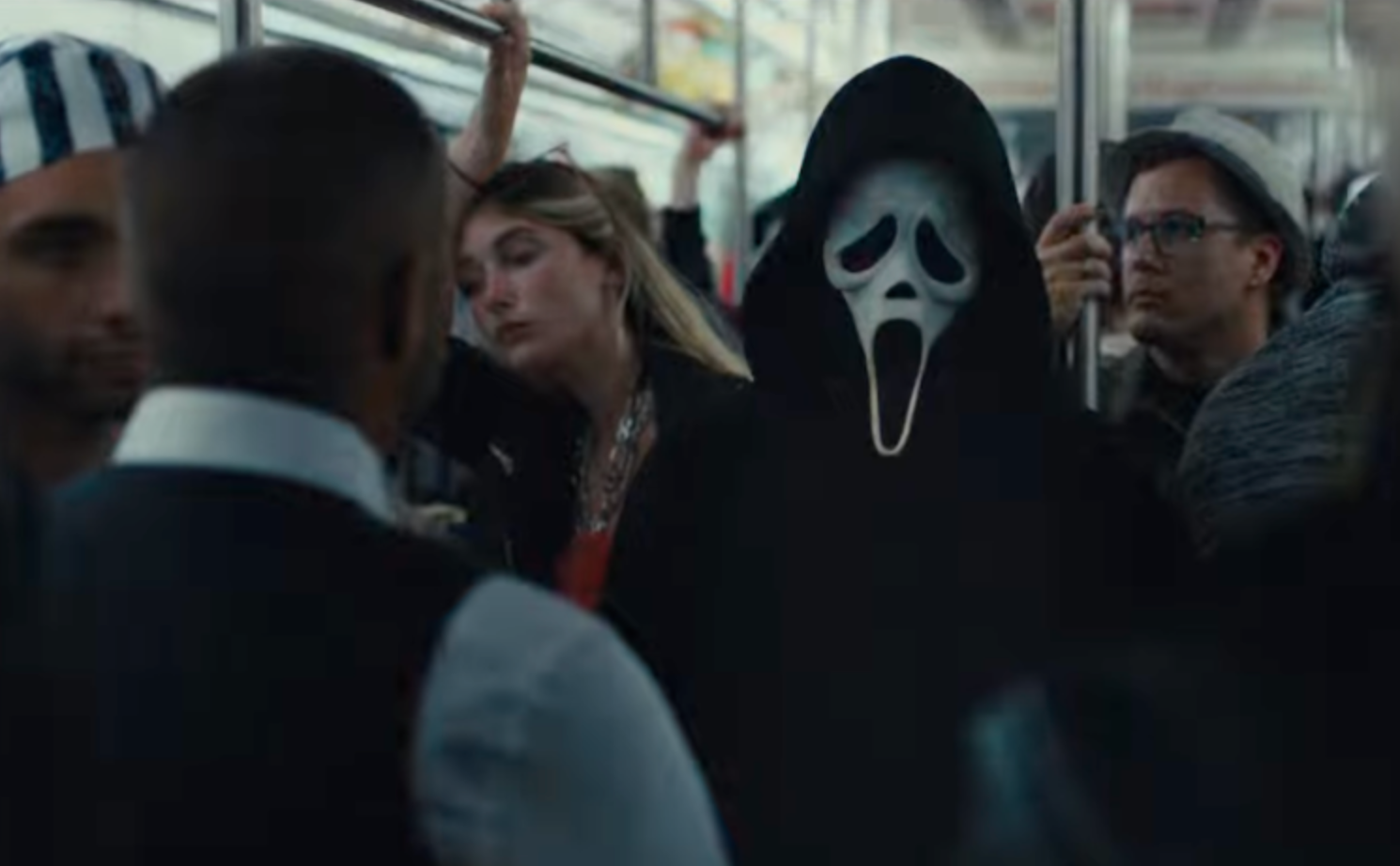
This time the location has shifted to New York - well, mostly a smallish number of interiors we're told are located in New York: nobody's getting stabbed at the Statue of Liberty here. More importantly, the song remains the same, as after the usual opening kill (delivered with an unusual twist) we learn that there is yet another Ghostface killer(s) on the loose looking to rack up a body count while keeping the audience guessing as to their real identity.

Nostalgia demands the return of series Gale Weathers (Courtney Cox) - a pay dispute having nixed the comeback of Sidney (Neve Campbell) who is mentioned but not really missed here - and the surprise reveal of Kirby Reed (Hayden Panettiere), who clearly was not as dead as she seemed at the end of Scream 4

But the main focus is on the new cast introduced in last year's installment: Sam Carpenter (Melissa Barrere), daughter of OG killer Billy Loomis (Skeet Urlich), her half sister Tara (Jenna Ortega), possible love interest Chad (Mason Gooding) and sassy movie expert Mindy (Jasmin Savoy Brown). 

There are also a number of new characters slightly more likely to be the real killer(s), especially once Mindy gives the talk about how they're now in "a franchise" and all bets are off as to who lives and who dies (it'd be great to see one of these films where the speech lets us know that a bunch of characters are 100% safe).

Directors Matt Bettinelli-Olpin and Tyler Gillet (working from a script by James Vanderbilt and Guy Busick) don't quite have the flair of Scream creator Wes Craven. Some of the series' slasher traditions - Ghostface might be a bit clumsy, but they get the job done - feel too familiar to add much in the way of tension. Still, there's enough randomness and ruthlessness to Ghostface's attacks to keep the suspense building.

Much of the work in the middle of the film involves trying to make it seem like yes, anything really could happen: the fact that largely it doesn't is only a problem if you're not thinking ahead to Scream VII.  Fortunately the kills themselves - especially a grocery store shoot-out and one involving a ladder strung between two high-up windows - provide some fresh angles on a format that needs them.

Add in a solid whodunnit element that skillfully keeps Ghostface's identity multiple choice, and the result  feels fresher than you'd expect a sixth film to be, with just enough brutality to the murders to keep things on edge (though exactly how many stabs it takes to kill someone does seem to be pretty variable). Fans of extremely lengthy bad guy monologues that explain exactly how and why their overly complicated murder plot was necessary will also not leave empty-handed.

If there's a weak link here it's the Carpenter sisters, who still feel a little blurry as characters. The series has always had multiple protagonists, but there's not enough friction between these two (especially once the killings begin) to make two fairly similar characters seem essential. 

Then again, this is a film where anyone can die and anyone could be the killer: if they're going to keep the franchise going, they may find themselves in need of a spare.

- Anthony Morris


Thursday, 2 March 2023

Review: Creed III

Like a lot of film genres, boxing movies are predictable, and their predictability is a big part of their pleasure. We know going in there's going to be a final fight, and the hero is going to go into that fight as the underdog. That's a story that's easy to tell when a fighter is starting out, or when they're well past their peak. But Creed III starts with Adonis Creed (Michael B Jordan, who also directs) retiring at the height of his powers. What could possibly bring him so low?

Enter Damien "Dame" Anderson (Jonathan Majors), who was a promising Golden Globes boxer and Creed's big brother in all but blood growing up. Fresh out of jail for a crime he... okay, he did commit, but it was hardly a crime (and Creed deserves a slice of the blame), he shows up not long after Creed's hung up his gloves, looking for - well, it's hard to be sure exactly what at first, but whatever it is, he's not waiting around.

Creed is initially wary of his former friend, sensing that prison may have changed him in ways he can't easily fix. But how can Creed deny a friend who has nothing when he has everything - including wife Bianca (Tessa Thompson), deaf daughter Amara (Mila Davis-Kent), and his tough love mother (Phylicia Rashad) just recovering from a stroke (uh oh).

Dame's pain is real, and the film works hard to keep him from being a simplistic villain, even when he reveals just how far he's willing to go to get a title shot against Creed's protege Felix (Jose Benavidez). Majors gives a great performance as a man empty inside, still driven by dreams he had twenty years ago coupled with anger towards the man he feels stole "his" life - not that he would have any idea what to do with it if he took it back.

(meanwhile, it's easy to forget that being defeated in this series doesn't equal death - thankfully the return of Viktor Drago (Florian Munteanu) doesn't quite segue into the kind of "enemies into family" move the Fast & Furious movies specialise in)

With Rocky finally banished from this spin-off (his name is mentioned exactly once), Creed is fully his own man. Legacy is always going to be a factor here - the question this time is, what kind of lessons are he teaching his daughter? Jordan spends much of the film playing Creed as often unsure of himself outside the ring, worried that he might be a man who tries to solve everything with his fists.

Which of course he does! This is a boxing movie after all, and Jordan (as director) brings plenty of style and flair to the fights, giving a fresh spin on the kind of pummelings the genre demands. He's not bad when it comes to selling the story's subtler emotions too, and if the final act occasionally feels a little rushed, well, we all know where we're going so why delay the pleasures of twin training montages?

When it comes to delivering genre thrills, Creed III really knows the ropes, powered by a pair of knockout performances that pack the kind of punch that'll leave you flat on the canvas. Sometimes these reviews just write themselves.

- Anthony Morris

Thursday, 23 February 2023

Review: Cocaine Bear

When a whole bunch of cocaine falls out of a plane and into a forest, only one animal has the guts to investigate: Cocaine Bear. Don't worry, she's actually called "Cocaine Bear" more than once, just in case you forgot what movie you were watching. 

Anyway, Cocaine Bear eats a bunch of cocaine and gets high as balls just in time for a variety of chumps to wander into the park. Turns out it isn't just weed that gives you the munchies.

Cocaine Bear is the kind of movie where the title is the joke, and whatever you're imagining as the punchline to that joke is probably better than what director Elizabeth Banks and her team put on the screen. Which isn't to say this is a dud: for one thing, it only goes 90 minutes. For another, it's surprisingly gory. For a third... cocaine?

Hollywood has loved movies about rampaging apex predators since, oh, lets say King Kong, though Jaws is probably the more relevant example here. As this is meant to be a "real" movie and not, say, Sharkansas (in which women prisoners are sent out to work in a swamp full of great white sharks), it is not just a collection of scenes in which a crazed bear eats people. This is cinema's loss, especially as every single scene that doesn't involve Cocaine Bear eating people is completely forgettable.

(this is based on "true events", in that a drug smuggler really did dump a bunch of cocaine out of a plane, and a bear did eat a - very small - amount of it. That's it for reality and this film)

It's not that the choice to tell a fairly grounded story about a bear high on cocaine in 1985, the last year when cocaine was a problem in America, was a mistake; this wants to mine the ludicrous nature of the scenario for black comedy, not go all out for exploitation thrills. So Cocaine Bear doesn't do impossible things like snort lines of Columbia's finest, though licking it off a severed leg is fine.

Likewise, a final act swerve into making Cocaine Bear a force for, well, not exactly good, but for only eating specific irredeemable bad guys (after spending much of the movie chomping random hippies and greenies) doesn't completely derail the movie. By this stage we've become attached to the few remaining humans, so focusing on only chomping scum is as good a choice as any.

But where this fails down is that, for a movie about a bear high on cocaine, this just isn't anywhere near as fun as it should be. For example, there are kids in this movie! Kids don't get eaten in Hollywood movies - why are there any people in this movie who are not in constant danger of being eaten? Especially when the only mildly transgressive thing they do - look, the forest is full of cocaine, you figure it out - results in no effects for good or ill?

And while the choice to keep events plausible is a reasonable one, it's definitely not the most exciting one. Why wasn't this a movie where a bunch of drug dealers basically attack a forest to get their drugs back and Cocaine Bear - still high on cocaine, gotta stay true to the franchise - gets gory revenge by brutally gnawing on a range of dirtbags who totally deserve it?

But back to reviewing the movie that exists, where we get a collection of mildly pissed-off characters mostly too boring to mention, played by a number of actors who all deserve better (including Ray Liotta, in what is probably his final on-screen appearance). None of them are given much to work with, in a way that would usually suggest a lot of scenes left on the cutting room floor but here is more likely just thin writing.

Often this feels like an attempt at a bargain basement Coen Brothers film, with a bunch of quirky morally ambivalent characters in over their head (before their heads get torn off). But the dialogue isn't that snappy, the running gags aren't all that funny, and when your movie promises a bear high on cocaine then trying to make a character-based crime comedy is occasionally frustrating. Get back to the bear! 

Then again, no other movie this year promises - then delivers - a bear going nuts while high on cocaine. When you've only got 90 minutes to fill, that's probably enough.


- Anthony Morris


Thursday, 2 February 2023

Review: Knock at the Cabin

M Night Shyamalan is known for making movies with a twist. But sometimes the twist is that there is no twist: what you see is what you get. Knock at the Cabin (based on a novel by Paul G Tremblay) is one of his films where he plays it straight. The idea may be bizarre, but the rug on the cabin floor remains firmly unpulled.

Eric (Jonathan Groff) and Andrew (Ben Aldridge), together with their almost eight year-old daughter Wen (Kristen Wui) are enjoying a getaway at a scenic cabin in the woods when four strangers (David Bautista, Nikki Amuka-Bird, Abby Quinn and Rupert Grint) turn up and demand to be let in. 

They're carrying weird weapons, seem kind of freaked out (aside from Bautista's soft-spoken Leonard) and don't seem willing to clearly articulate what they want beyond ominous suggestions that some tough decisions will have to be made. Those inside the cabin don't want to let them in. Those outside the cabin won't take no for an answer.

Actually, later on they will, because their goal is nothing less than saving the world from the apocalypse - but to do that, the family inside the house will be asked a number of times to make a choice. Either they sacrifice one of their own, or the whole world dies and they get to live alone in the ashes. Each time they say no, the quartet (and the world) will have to pay a price.

This should be a gripping dilemma, part Biblical, part conspiracy nightmare. At times it almost gets there, but the word to stress is "almost". For one, dramatically it doesn't quite hang together: while the end of the world is in theory as big as stakes get, in this movie "the world" is the seven people in the cabin. We see news footage of the outside world, but there's no personal connection to it - or at least, not one we can trust. 

That's largely intentional. We don't know if the quartet's talk of normal lives and families is real, or they're deranged cult members (either way, their end game is extremely self-destructive). But it means the stakes are entirely abstract. It's a mind game, a "what would you do" dilemma for the audience, a film straining to make the kind of conversation starter people drop into conversations at parties seem profound.

The quartet also make it clear that the family's choice has to be their own. They're not going to force them, and they can't kill them - they have to pick and choose the victim themselves. So we know how this is going to progress: at first the family are going to say no because the quartet are clearly crazy, and then the evidence that they're not is going to mount up. 

There's still some tension here, thanks largely to the performances. But outside of a few tight action sequences it's not a lot of tension, because if the four intruders are crazy and the world is safe, then there's no story once they reveal they're not going to kill the family. And if the world isn't safe? Oh wait, we're never given any reason to care about "the world" in the movie. In fact, it'd be a better ending if they did choose to end the world, because at least then we'd get to see some cool devastation.

Shyamalan's movies are traditionally largely plot and concept driven; characters are chess pieces moved around to achieve the desired effect. Here that's actually part of the story, which is a nice twist (aha!), and the increasingly pained performances from the quartet are one of the elements that does work well. The dads, not so much, but that's mostly because their role is to frustrate us: if they say yes right away then there's no story, but while they're saying no they're just dragging things out.

At just over 90 minutes and with the action almost entirely confined to the cabin, this is about as small scale as apocalypses get. It's a fun concept, but Shyamalan usually keeps his humor to a minimum (his cameos at least are always a delight). The result is a silly movie that takes itself a little too seriously, driven by the idea that we'll want the characters to do the right thing rather than the entertaining thing. 

How's that worked out for humanity so far?

- Anthony Morris